A practical guide on home composting has just been published for Martinique and Guadeloupe. Produced by the Ypiranga Association of Pastinha with support from ADEME, it notes that approximately 30 % of the waste found in trash cans can be composted.
Designed as an educational tool, the Practical Guide to Home Composting in the Caribbean is intended for residents with gardens as well as those living in apartments or wishing to participate in a community composting initiative. Its content was developed with local realities in mind: the tropical climate, the types of food waste produced, space constraints, and accessible solutions.
About 100 kg per person per year
According to the guide, 30 % of waste Items found in trash cans can be composted, which amounts to approximately 100 kg per person per year. Some of these materials, which are currently sent to incineration or landfills, can thus be recycled directly at home.
Peelings, coffee grounds, fallen leaves, grass clippings, and other small plant waste can all be turned into compost. The document highlights several benefits:
- reduce the volume of trash;
- promote the return of organic matter to the soil;
- improve soil fertility;
- to limit erosion.
In the Caribbean context, compost can also help improve the soil’s ability to retain water, a benefit that is particularly useful during the Lent. The guide also notes that local governments must offer source separation of food waste starting in 2024.
From the garden to the apartment: several possible solutions
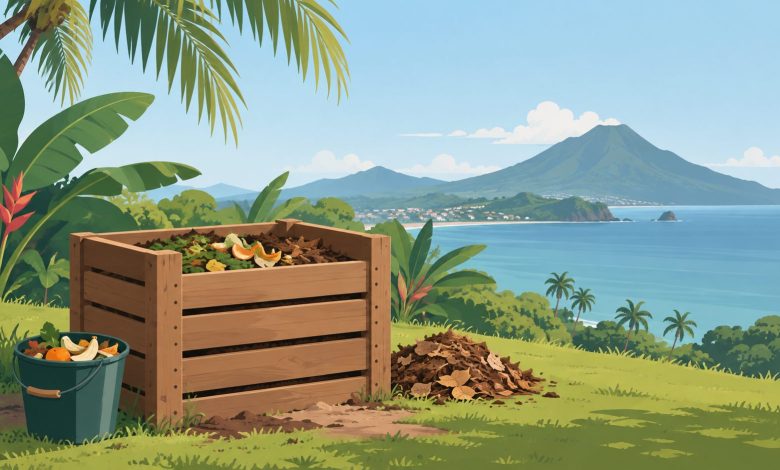
Composting isn't just for large properties. For homes, there are several options available: wooden or plastic compost bins, compost piles, or wire mesh structures.
For apartments, the guide specifically recommends the shared composting at the base of the building and the vermicomposting, which takes up very little space.
In apartment complexes, however, setting up a communal compost bin requires coordination among residents, the property management company, the landlord, or the local government, and may involve appointing a site coordinator.
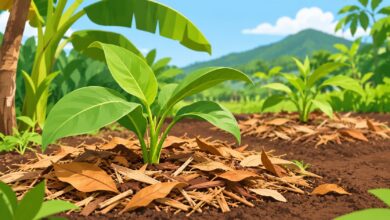
For large volumes of yard waste, the document also highlights the mulching. Fallen leaves, grass clippings, wood chips, coconut fiber, or shredded branches can be used to cover the ground, reduce evaporation, and limit erosion.
Initiatives at the level of the three intermunicipal associations
The guide also includes a section specifically dedicated to Martinique and the solutions available in each region.
The CACEM It is noted in particular for its initiatives related to green waste and its collection. CAP North Martinique offers a system for requesting a compost bin.
Over in Espace Sud, the guide directs readers to the waste management department and the SudEnv app for information on bio-waste management.
The document also lists recycling centers and the various options for collecting or dropping off compost bins, depending on the intermunicipal authority.
Beyond composting, the guide encourages, more broadly, the Local Recycling of Green Waste, particularly through mulching when the volumes become too large to be fully composted.
You can view it here A PRACTICAL GUIDE TO HOME COMPOSTING IN THE CARIBBEAN