Published in early 2026 and formalized by the decree of February 12, the third multi-year energy plan (PPE 3) serves as the new roadmap for French energy policy for the period 2026–2035. Covering the revival of nuclear power, the regulated development of renewable energy, and the acceleration of the electrification of end uses, this strategic document sets targets for production, consumption, and the energy mix with a focus on decarbonization, security of supply, and national independence. Presented as a key driver for achieving carbon neutrality by 2050, PPE 3 nevertheless raises questions about its practical implementation, its economic impacts, and its adaptation to regional realities, particularly in the overseas territories.
In terms of quantitative targets, PPE 3 sets an ambitious path: to increase the production of’carbon-free electricity between 650 and 693 TWh in 2035, compared with about 458 TWh in 2023, while reducing the fossil fuel consumption about 40 % of final consumption by 2030. The strategy is based on a widespread electrification of applications — industry, construction, transportation, and the digital sector — to gradually replace imported fossil fuels with electricity, which still account for a large share of current energy consumption.
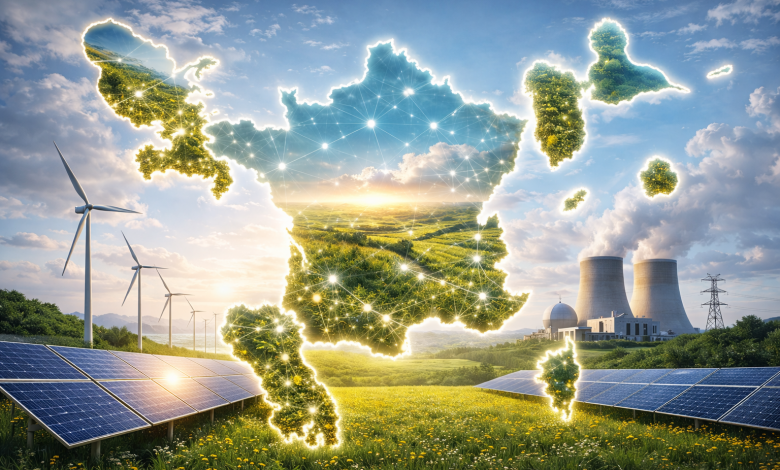
PPE 3 is based on a balanced energy mix combining a revival of nuclear power with the development of renewable energy. Regarding nuclear power, it confirms the construction of six EPR2 reactors, scheduled to come online starting in 2038, the expansion of existing reactors, and a possible option for eight additional units. Regarding renewables, the plan calls for a A phased expansion of photovoltaic capacity (48 GW installed by 2030) and continued development of offshore wind power, while prioritizing the retrofitting of onshore wind farms.
One of the new features is the Implementation of a national electrification plan starting in 2026 to support this transition and a simplified mechanism for revising the programming in 2027, in order to adapt the targets to changes in the economic, technological, and geopolitical landscape. The decree also stipulates that renewable energy capacity after 2028 may be adjusted based on consumption, the development of carbon-free generation capacity, and the flexibility required by the electric power system.
This roadmap is subject to political and sector-specific debates and critiques. Some stakeholders welcome the clarity of a long-term strategy to reduce dependence on fossil fuels and restructure France’s industrial sector. Others believe that certain goals—particularly those related to renewables—are less ambitious than in previous plans, or that the revival of nuclear power raises questions about its feasibility and cost. Some have also criticized the process of enacting the plan by decree without in-depth parliamentary debate.
It now remains to be seen how these guidelines will be implemented in practice. Will the financial and human resources allocated be sufficient to achieve the set objectives? Will the regions—particularly the overseas territories—have the necessary flexibility to adapt this roadmap to their specific circumstances? Will the pace of development of renewable energy and nuclear power be compatible with industrial, environmental, and social constraints? How will the impacts on household bills and business competitiveness be managed? Finally, will the planned review clause allow for effective adjustments to the trajectory in light of future economic, climate, and geopolitical developments?
Philippe Pied