
Counting & Protecting. Members of Asso-Mer, supported by numerous volunteers from all over Martinique, spent the entire year of 2025 counting the number of turtle hatchlings emerging on the beaches in the northern part of the island. They present their work, which supports sea turtles and promotes biodiversity.
Count to Protect Better
Asso-Mer was tasked with conducting specific work to count and record the number of turtle nests, as this is a key indicator of the species’ health. Conducting this work accurately each year allows for the collection of data and the assessment of nesting trends over time. In 2025, the monitoring protocol focused specifically on these six coves: Céron North, Céron South, Couleuvre North, Couleuvre South, Lévrier, and À Voile.
To showcase the work carried out during 2025, Asso-Mer has just published its Technical Report – Monitoring of the’activitySea turtle nesting season at the Anses du Nord site in Preacher.
Commissioned by the ONF, Asso-Mer has committed to ensuring the successful completion of the mission in four phases:
A report full of valuable insights
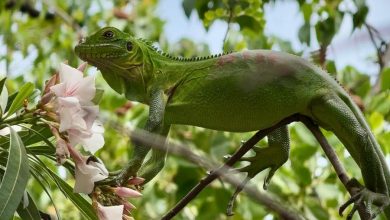
The vast majority of the tracks left by turtles were from «hawksbill turtles»—189 out of the 255 tracks observed, representing 75% of the total number. The remaining tracks were made by green sea turtles (49) and leatherback sea turtles (2); for 15 tracks, it was not possible to identify the species of turtle that made them.
The observations also pertain to the specific location where eggs are laid, which may be in the forest, on bare sand, or at the forest edge. Of the 255 tracks observed throughout the year, the vast majority of nests—146—were laid at the forest edge, compared to 93 on bare sand and only 16 in the forest. These two factors help identify the general trends in turtle nesting and thus better protect the areas identified as preferred nesting sites.
This work relies on the joint efforts of volunteers, who are supervised, trained, and supported by Asso-Mer members. «This season has allowed us to forge strong bonds with volunteers who have been deeply involved since previous years and with the 38 newly trained volunteers,» emphasize Asso-Mer officials in the conclusion of their report.
«Since 2021, the number of recorded nesting tracks has continued to increase. The final analysis of the 2025 data, compared with previous years, will provide concrete insights into the nesting ecology of sea turtles and help inform the design of effective conservation measures,»,
they point out in the report's conclusion.
The results for 2025 are positive, and 2026 looks more promising than ever, since Asso-Mer will be coordinating all the surveys conducted on the island of Martinique. Great news!