Sports and Charity Event – La Traversée de l’Espoir, 16th Edition · EXOCET Association of Les Trois-Îlets
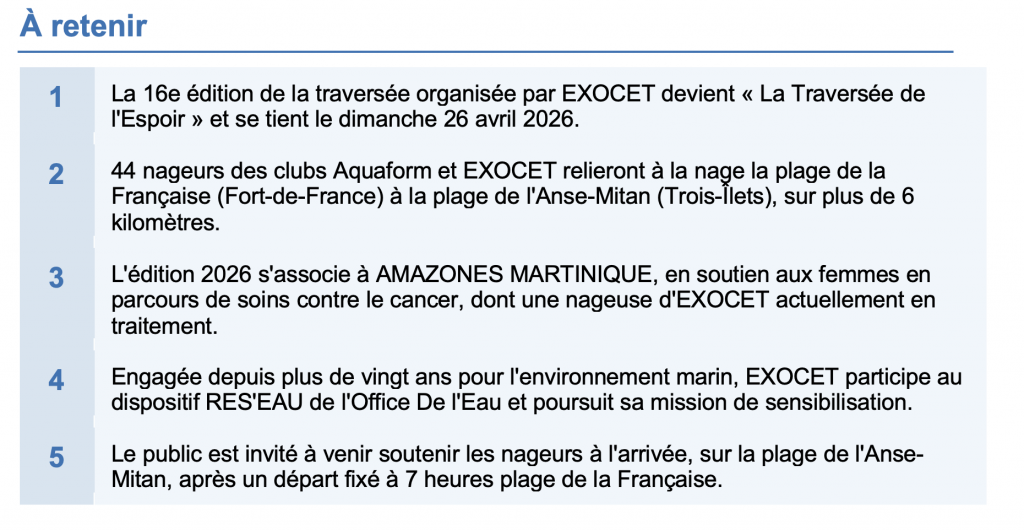
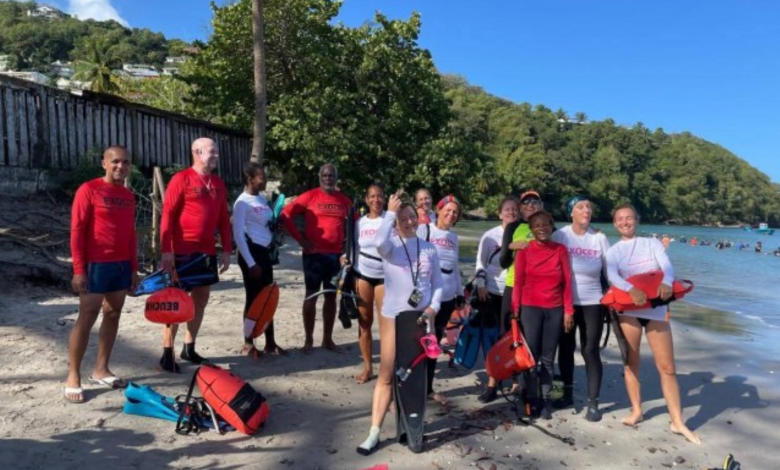
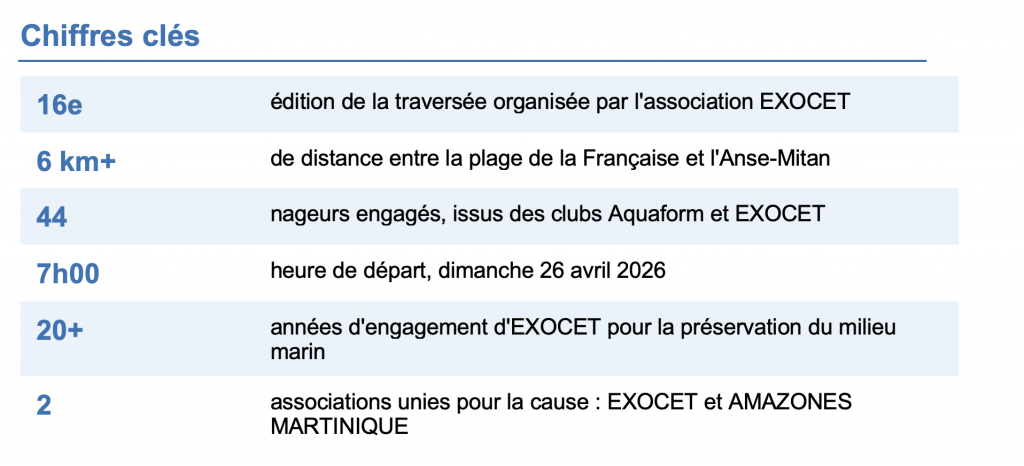
On Sunday, April 26, 2026, 44 swimmers from the Aquaform and EXOCET clubs will set off at 7 a.m. from La Française Beach in Fort-de-France to swim to Anse-Mitan Beach in Les Trois-Îlets. More than 6 kilometers of swimming through one of the world’s most beautiful bays, in support of a cause that has now taken center stage: supporting women undergoing cancer treatment. The 16th edition of the swim, organized by the EXOCET association, has been renamed «La Traversée de l’Espoir» (The Swim of Hope).
Every year for the past sixteen years, the EXOCET association in Trois-Îlets has brought together swimmers of all ages and backgrounds to swim from Fort-de-France to Trois-Îlets. In 2026, the swim will take on a new name—and a new scope. By partnering with AMAZONES MARTINIQUE, an organization that supports women affected by cancer, EXOCET is placing solidarity at the heart of the event. One of its swimmers is currently undergoing treatment herself: this is for her, and for all those who are facing the same fight against cancer, that the 44 participants will set out this Sunday morning, escorted by the SNSM teams and united by a common motto—which has become the title: hope.
A Journey That Has Become Apparent
Since its first edition, the crossing of the Fort-de-France Bay is a unique event on the Martinique sports calendar. On paper, it is a long, demanding open-water swim, with conditions that can vary greatly depending on the weather and currents. In the spirit of the EXOCET association, it is above all an opportunity to demonstrate that the sea is a shared, accessible, and precious space.
Renaming the 2026 event «Traversée de l’Espoir» is therefore by no means just a PR stunt: the name signifies a shift. The swimmers are no longer just crossing a bay; they are carrying a collective message.
«Swimming across the bay is a big challenge in itself. Doing it for a cause that affects so many women around us gives every stroke even more meaning.»
AMAZONES MARTINIQUE at the heart of the initiative
The partnership with the AMAZONES MARTINIQUE association gives the 2026 edition its unique character. The organization supports women undergoing cancer treatment and advocates for the integration of sports into their therapy.
Behind this approach lies a conviction shared with EXOCET: adapted physical activity helps patients better tolerate treatments, rebuild their relationship with their bodies, and break out of isolation. An EXOCET swimmer, currently undergoing treatment, embodies this connection between sports and care. Alongside her, the 43 other swimmers will turn the Traversée de l’Espoir into a collective gesture of support and a symbol of resilience for all women fighting the same battle.
A Long-Standing Commitment to the Environment
For more than twenty years, EXOCET has been committed to preserving the marine environment. From cleaning the seafloor and conducting beach cleanups to raising public awareness, the Trois-Îlets club does not separate sports activities from environmental responsibility.
The association participates in the RES’EAU initiative led by the Office De l’Eau, which brings together stakeholders committed to conservation of aquatic environments. The “Traversée de l’Espoir” thus provides an additional platform to raise awareness about marine pollution and to remind people that the quality of Fort-de-France Bay directly determines whether this type of event can even take place.
«You can’t swim across a bay and remain indifferent to what you see floating there. Preserving the marine environment isn’t just a nice-to-have; it’s the very condition for engaging in this activity.»
Security, logistics, and the public at the finish line
An open-water swim of more than six kilometers requires rigorous supervision. The members of the National Maritime Rescue Society (SNSM) will accompany the 44 swimmers throughout the course, alongside EXOCET’s own support team and the Aquaform club teams.
Schedules and Routes
The race is set to begin at 7 a.m. at La Française Beach to take advantage of the best conditions and minimize exposure to the sun. The swimmers are expected to finish at Anse-Mitan Beach in Les Trois-Îlets, where the public is invited to come out and cheer them on.
This simple, heartwarming moment is one of the highlights of the crossing: it celebrates the effort that has been made, but also serves as a reminder of the meaning the organizers wanted to convey with this year’s event.
«Sports have a place at the heart of therapy. Showing these women swimming, walking, and moving demonstrates that they are making progress—and that they are not alone.»
Key Points About the "Traversée de l’Espoir" in Martinique
Sixteen editions later, the crossing of Fort-de-France Bay confirms that a local sporting event can transcend the realm of athletic competition to become a social gathering.
By combining solidarity with women affected by cancer, a commitment to the environment, and the promotion of Martinique’s coastline, EXOCET is building—event after event—a tradition that resonates far beyond the swimming community. See you Sunday at dawn at La Française Beach.
Philippe PIED