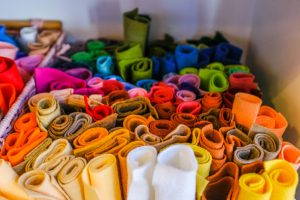

Making the Most of the Resource. Textiles account for a significant portion of pollution and waste. The eco-organization Re_Fashion continues to collect textiles in Martinique in order to maximize the reuse of this raw material. Not all items can be reused as-is, but those that can are repurposed as secondhand clothing or used for building insulation. «Nothing is thrown away; everything is transformed,» according to their slogan.
Textile Pollution
«Fast fashion» is known as one of the most polluting industries due to its high water consumption and the release of numerous pollutants, such as microplastics, a problem exacerbated by the short lifespan of these products. As a result, the recycling of textile products has become a key issue in the recycling industry.
According to the 2024 figures from the Refashion Barometer, 3.5 billion items of clothing, home textiles, and shoes were sold in France. This is a staggering figure, up from 2023, and it highlights a critical challenge for sustainable development and the recycling industry.
North Cape, Martinique
Local governments are committed to waste collection and recycling, including textile waste; it is within this framework that CAP Nord Martinique has turned to Re_fashion, an organization that collects and repurposes textile products.
In Fort-de-France, there are about twenty collection points, in addition to all those located throughout the rest of the island, such as the Acise recycling shop in Case-Pilote, for example.
Instructions
Collection coordinators remind residents that textiles—including clothing, household linens, and shoes—must be washed and placed dry and clean in a 30-liter plastic bag, then dropped off at the designated collection points.
Once collected, textile products are reused as-is, after being washed, and resold in specialty stores whenever possible; however, when they are too damaged or unusable, they are cut into pieces, and their fibers are used as insulation in the construction industry. To a very limited extent, unusable items are incinerated.
Dropping off textiles at collection points is therefore a virtuous act for the planet and aligns with the principles of the circular and social economy, benefiting both the environment and those most in need.
S.D.