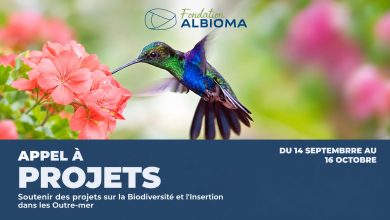

From September 14 to October 16, 2026, the Albioma Foundation will launch a new call for projects aimed at overseas associations working to preserve biodiversity or promote workforce integration. In Martinique, this new campaign follows the funding of two initiatives related to the recycling of bio-waste and the restoration of Caribbean ponds.
In 2025, the Foundation reported that it had contributed more than 275,000 euros to projects carried out in Guadeloupe, Martinique, French Guiana, Mayotte, and Réunion. Nine partnerships were covered by an agreement during the year, including three new ones, bringing the total number of initiatives supported since the organization’s creation in 2023 to 27.
In Martinique, 37,159 euros will be paid out in 2025
According to the Albioma Foundation’s 2025 Annual Report, Martinique received 37,159 euros during the year. The territory thus represents 13,5 % funding disbursed to the five departments and territories in question.
The majority of this amount, namely 26,035 euros, was dedicated to a job placement project based on the treatment and recycling of biowaste. The remaining 11,124 euros were allocated to biodiversity as part of a joint program between Martinique and Guadeloupe focused on Caribbean ponds.
Across all of the overseas territories, 57,5 % Funding disbursed in 2025 was directed toward biodiversity conservation, compared to 42,5 % for employment integration. The total amount detailed in the report amounts to 275,776 euros.
Biowaste Is Becoming a Training Tool
The main project based directly in Martinique is led by L’Espérance Auteuil Martinique through its integration workshops and work sites «Jaden Lesperans» and «Recyk Bwa». It has received 61,035 euros in funding over two years, of which 26,035 euros were paid out in 2025.
In particular, the funding provided enabled the purchase of a mechanical composter. Installed at the Jaden Lesperans workshop, the equipment processes residues from the site’s agricultural activities and food waste from the school cafeteria.
The goal is not limited to reducing the amount of waste to be disposed of. The compost produced is reused for the workshop’s crops, while the platform’s operations serve as a learning opportunity for employees in job-reintegration programs.
In 2025, 25 employees were trained in how to use the composter, monitor the decomposition process, and the various uses of compost. The report also notes an average of 10 kilograms of food scraps recycled every week and more than 2 cubic meters of compost produced.
These initial results are still from the start-up phase, but they demonstrate the potential for combining waste management, agricultural production, and vocational training. Biowaste is transformed into a local resource, while also helping to train people who face barriers to employment.
A Program to Restore Caribbean Ponds
The second round of funding for Martinique covers the REMA II program, dedicated to the restoration, management, and enhancement of ponds in the Caribbean.
Led by the French Committee of the International Union for Conservation of Nature, through the Tropical Wetlands Focal Point, this program benefits from’74,160 euros in funding over three years. It covers both Martinique and Guadeloupe.
In 2025, the teams visited 92 ponds in both territories. Of these, 35 were restored or rehabilitated, while 57 people were trained in methods for managing these habitats. Scientific research was also conducted on 16 ponds to identify indicators for assessing their ecological condition.
However, the report does not specify how these results are broken down between Martinique and Guadeloupe. Nor should the 92 ponds be presented as having all been restored: this figure corresponds to the number of sites visited, while 35 were the subject of support or intervention.
Despite their often small size, ponds serve as habitats for many species and contribute to ecological connectivity. However, their condition can be degraded by a lack of maintenance, development, or the spread of invasive exotic plants.
Which projects will be eligible to apply in September?
The new call for proposals will be open for one month, September 14 through October 16, 2026. It is intended for organizations wishing to develop an initiative that promotes biodiversity, employment integration, or both.
According to the terms outlined in the press release, the projects must represent an estimated amount of between 5,000 and 20,000 euros per year and may last from one to three years. Co-financing will be required.
The program is primarily intended to finance investments, with the exception of vehicle purchases. A project may have already begun, provided that the investment for which support is being requested has not yet been made.
Initiatives focused exclusively on research or outreach will not be eligible.
This exclusion does not necessarily mean that these activities are prohibited within a larger project: Several supported initiatives in 2025 included educational or scientific components, but these were part of concrete efforts focused on restoration, waste management, or species conservation.
Organizations are encouraged to contact the Foundation before submitting their application to ensure that their project meets the stated criteria.
Concrete achievements in five regions
The 2025 Report provides several examples of the types of initiatives that have already been supported. In Mayotte, 1,632 native plants Trees belonging to 23 species were planted to restore the dry forest at Pointe de Saziley.
In French Guiana, a pilot platform collected 81.5 metric tons of biowaste during the first three quarters of the year.
In Guadeloupe, funding for 40 charging stations is intended to contribute to the growth of textile collection and reuse. Twenty locations had been approved by the end of 2025, prior to the launch of the operational rollout in 2026.
In Réunion, the projects being supported focus, in particular, on restoring sea turtle nesting beaches, protecting the Manapany green gecko, and the ecological restoration of the Maïdo area following the fires.
These operations show that The Foundation prioritizes investments directly linked to on-the-ground initiatives.
For organizations in Martinique, the September campaign thus opens up a new funding opportunity, but within a specific scope: concrete projects that are co-funded and focus on biodiversity or workforce integration.
You can view it here The ALBIOMA Foundation's 2025 Annual Report