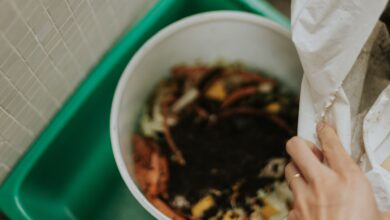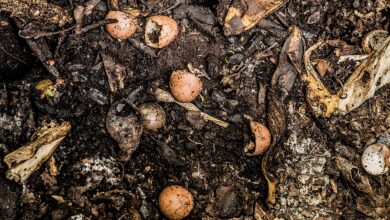

As the bidding process for the renewal of the public service delegation enters its final phase—with the deadline for submitting bids extended to February 9—Martinique’s organic waste treatment facility is ramping up operations. Green waste, food scraps, unsold store merchandise, used cooking oil: everything is now directed toward a clear goal—to convert as much organic material as possible into compost, rather than sending these wet waste materials to incineration or landfills. As Martinique seeks to reduce its waste and make better use of its resources, the facility is emerging as a vital link in the chain. This ramp-up, however, depends on one crucial factor: the quality of source separation. This is now made possible thanks to new equipment and the planned renovation of a major facility, scheduled for late May/early June 2026. Guynel Holo, technical sales representative at IDEX, discusses how the site operates, the technical challenges encountered, and the future challenges involved in making compost a sustainable and fully effective solution for agriculture in Martinique.
Interview with JOHAN REGIS – Director of the CVO
«The industry is scaling up: volumes are increasing, practices are becoming more structured, and compost is now the strategic cornerstone of organic waste recovery in Martinique.»
 What is the current status of the renewal of the public service delegation?
The schedule has been adjusted: the deadline for submitting bids has been extended to February 9. The current operator (IDEX) is positioning itself for the renewal, and other parties may submit bids, but until the bids are filed, the situation remains unclear.
Specifically, what are you covering on the website today?
We receive the green waste from Martinique, part of the fermentable fractions and especially food waste coming primarily from department stores and, potentially, the restaurant industry. Originally, the site was also intended to produce gas and electricity through anaerobic digestion, but The entire “meta” section is down. Today, we're really focusing on compost.
How many types of compost do you produce?
Two:
- A so-called compost “organic” : it does not include not food waste (shredded green waste only).
- Compost “conventional” (often called T5) : It includes food waste (including, depending on what is added, oils, dairy products, kitchen scraps, etc.).
What volumes are you currently processing?
In terms of magnitude: 24,000 metric tons per year of green waste and about 500 metric tons per year of food waste (regarding the waste streams that directly concern us during this visit). We see stability in green waste and a sharp increase in food waste, with a very marked rise since 2023.
Why has there been an increase in food waste since 2023?
There has been a strong push to collect more food waste (particularly from industrial sources and unsold food), as well as an increase in resources. But this increase poses a challenge: absorb and process properly these flows.
Who are your main partners or contributors?
For the green waste, it is mainly the local governments through the EPCIs (for example Southern Region, and more broadly, intermunicipal organizations) and recycling centers. Private-sector options exist but remain marginal on this feed.
For the food waste, it's much more varied: unsold merchandise from stores, contributions from private entities, sometimes through carriers that supply a variety of customer segments (ranging from yogurt and packaged goods to flour and other foodstuffs). We also receive edible oils.
Interview with JEAN LEROYER – Technical Manager at IDEX
«It all starts with the sorting process: if the materials arrive clean, the technology works as intended; if they arrive contaminated, we create obstacles where there should be recycling.»

What obstacles do you face on a daily basis?
On the green waste, the main topic is the forms of pollution : pebbles, cables, metal parts… Yet the process is simple: a shredder is not designed to handle unwanted items. An improvement has been implemented: rather than a “blind” loader, we now use a shovel with a jaw to check what goes into the grinder and remove as many pollutants as possible beforehand. Even so, some unwanted substances may remain.
And what about food waste?
The main obstacle is the increase in volume: we needed a more powerful tool to separate efficiently organic matter and packaging. A new machine is currently being rolled out, with testing scheduled to begin today.
What exactly is this new machine used for?
It is used to decondition : Separate packaging (plastics, etc.) from recyclable organic material. The simplest way to picture this is as a juicer, but on an industrial scale: on the one hand, we recover the refusal (packaging) that is then sent to be incinerated; on the other hand, organic material that resembles a dough, integrated into the composting process.

What capacity are you aiming for with this equipment?
We're talking about approximately 3,500 metric tons per year of unpackaged food waste, with the potential for growth. The “daily” quantity varies too much: a broken refrigerator or a logistical issue can result in very large volumes of waste in a single day. That is why we primarily think in terms of annual volume.
Why is it so important to divert these waste streams from incineration and landfilling?
Because this food waste is very humid :
- In incineration, moisture reduces performance (to put it simply, “you can’t generate electricity from water”).
- When it comes to landfilling, we loses a recyclable material, and this generates gases and associated risks.
Common sense means: first, prevent waste; then maximize value as closely as possible. An individual can compost in their yard. A business or supermarket cannot: it needs a relay tool like this one.

You talk a lot about the quality of the sorting. Where's the problem?
At the source. Example: putting yard waste in a plastic bag “To make it cleaner” is a bad idea, because the plastic eventually ends up as microplastics in the compost. And compost is used and sometimes distributed: No one wants to collect compost that contains bits of plastic.
The message is simple: What happens at the beginning determines the quality at the end.
Interview with Guynel HOLO – Sales Engineer at IDEX

Where does the compost go these days?
Marketing is already in place. Approximately 80 % of the production goes to the banana industry. The rest goes to orchards, nurseries, vegetable farmers. And demand is growing: there are more orders than production capacity at certain times.
Why don't you produce more if there's demand?
Because we've long been limited by space: we still are with approximately 65 % of work surface area removed, until a major hall is repaired. The renovation is scheduled for late May / early June 2026. Once this hall is available again, we'll be able to increase production volumes and improve quality (more space, more flexibility, and more time for aging).
What improvements are you aiming for with the two compost piles?
Two main areas of focus:
- Minimize plastic pollution as much as possible (on both products).
- Regarding compost that includes food waste, improve ripening : The more mature the compost, the finer and richer it becomes.

Has anaerobic digestion been completely abandoned?
The anaerobic digestion component was originally designed to handle a large volume of feedstock, which, in reality, was never collected as planned. The key issue is the collection and quality of the feedstock. Today, the priority is clear: to make compost, properly, and divert as much organic waste as possible from unsuitable disposal systems.
How do you raise public awareness?
Not enough, at this stage. There is an on-site display (information sign), but the real momentum comes primarily from the organizing authority, since the site is part of a public service delegation “under the umbrella” of the union. Efforts are underway: videos presenting the sites, discussions on educational field trips (schools, local stakeholders, interested parties).
What's missing to better coordinate all of this?
Communication that is more “commensurate with the challenges” and stronger coordination, even as progress is being made. The idea is to build a genuine roadmap : to help people understand what these sites do, why sorting is crucial, and how everyone can do their part.
Would you be open to sharing educational materials, acting as a liaison, or forming partnerships?
Yes, but within a framework coordinated with the organizing authority’s communications. The operator cannot “do whatever it wants” on its own: there are approval processes, an overall communication strategy, and designated points of contact.
One last thing: What is the most important message to convey?
The site is evolving, investing, upgrading, and renovating. But the real fight, it's the sorting process and the quality of the materials brought in: If the raw material is clean, the compost will be clean. If we mix them, we'll create problems… and we'll ruin a product that many people in Martinique already use and enjoy.
Thierry Léonard