
STRENGTH

An Ocean Under Pressure: What Risks Does Martinique Face by 2050?

Sea levels are rising faster, the ocean is warming, and coral reefs are experiencing unprecedented thermal stress. On a global scale, these changes directly affect island territories, which are particularly dependent on the health of marine environments. Published on June 8, 2026, the Starfish Barometer compiles the latest scientific knowledge on the state of the ocean and its relationship with human societies. Its conclusion is clear: Protection efforts are making progress, but they still lag behind the accelerating pace of global warming, pollution, and biodiversity loss. For Martinique, these warnings raise questions about the future of the coastline, ecosystems, and marine-related activities.


Sea levels are now rising more quickly

One of the key highlights of the 2026 edition is the acceleration of the average rise in sea level.

Between 1993 and 2011, the global increase was estimated at about 2.6 millimeters per year. It reached 4.2 millimeters per year between 2012 and 2025. This trend is primarily due to warming water, which increases its volume, as well as the melting of continental ice.

The challenge, therefore, is no longer just a gradual rise in sea level, but the acceleration of this phenomenon. For coastal regions, this trend reduces the time available to adapt infrastructure and land-use policies.

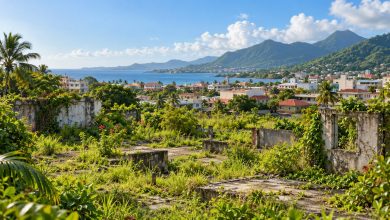
In Martinique, it raises some very practical questions: coastal erosion, the deterioration of beaches, the exposure of low-lying areas, and the vulnerability of structures built near the shoreline. Roads, water and sewer systems, port facilities, housing, and tourist accommodations may also be affected.

Rising water levels also increase the risks during periods of heavy swells or flooding. Coastal Adaptation must therefore be planned over several decades, looking beyond just immediate development projects.

A warmer ocean facing multiple pressures

In 2025, the average global ocean surface temperature reached its third-highest level on record. It stood at 0.49 °C above the 1981–2010 average, following the record highs of 2023 and 2024.

In June 2025, approximately 20 % of the world's oceans was experiencing severe marine heatwave conditions.

These episodes correspond to periods during which sea temperatures remain abnormally high. They can disrupt species reproduction, displace certain fish populations, degrade habitats, and weaken the resources used by the fishing industry.

Global warming does not occur in isolation. About one-quarter of the top 1,000 meters of the ocean is now simultaneously exposed to several climate stressors, including acidification, deoxygenation, and changes in salinity.

For Martinique, this accumulation of pressures is particularly significant. Fishing, water sports, tourism, and the natural protection of the coastline all depend on environments capable of withstanding change.

However, ecosystems weakened by heat also become more vulnerable to local pressures: water pollution, land-based discharges, waste, coastal development, or the overexploitation of certain resources.

Coral Reefs on the Front Lines

The state of the reefs is one of the most striking warnings in the Barometer.

Between January 2023 and September 2025, 84.4% of the world's coral reefs in the first and third quarters experienced thermal stress intense enough to cause them to bleach. The previous record, observed between 2014 and 2017, was 68.2 %.

Bleaching does not necessarily mean that the coral is immediately dead. However, when exposed to prolonged heat, it expels the microorganisms with which it lives in symbiosis. It then loses its color and becomes much more vulnerable.

When temperatures drop rapidly, some corals can recover. However, episodes that last too long or occur too frequently can lead to coral mortality and long-term reef degradation.

The issue goes beyond simply conserving biodiversity. Reefs occupy less than 0.2 % of the seafloor, but at least support 25 % of marine species. They contribute to fishing, tourism, and wave energy attenuation.

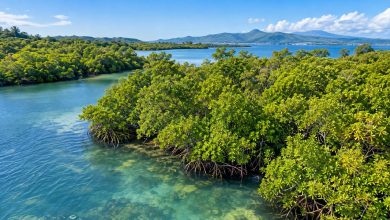
The Barometer also highlights the decline of several coastal ecosystems since 1970. Globally, the area of coral reefs is estimated to have decreased by 26,4 %, that of the mangroves in 11,8 % and that of the seagrass beds in 16,3 %.

These ecosystems function in a complementary manner. They provide habitats for species, support certain fishery resources, store carbon, and reduce the exposure of coastlines to erosion and waves.

A transformation that also comes at an economic cost

Changes in the ocean do not only have ecological consequences.

In 2024, tropical storms and floods led to approximately $212 billion in economic losses worldwide, which is nearly twice the amount recorded in 2023. Only 34 % of these losses were insured.

These figures cannot be directly applied to Martinique. Nevertheless, they show that extreme events are leading to increasing expenditures to repair buildings, restore infrastructure, and enable the resumption of activities.

In island regions, the consequences can last well beyond the event itself. The deterioration of a road, a water system, a port facility, or a tourist attraction can affect an entire sector of the local economy.

The report also estimates that climate-related damage to fisheries, reefs, mangroves, and ports amounts to a significant portion of the social cost of carbon.

Preserving marine ecosystems is therefore not just a matter of nature conservation policy. It is also about reducing the country’s vulnerability and limiting the future costs of inaction.

Protected Areas That Are Still Not Effective Enough

Conservation efforts are making progress, but remain incomplete.

As of mid-2026, marine protected areas covered 10.01 % of the world's oceans, compared with 8.34 % in 2024. Only 3.2 % of floor space However, they enjoyed full or high levels of protection.

Simply designating an area as protected is not enough to ensure the restoration of ecosystems. Effective protection requires human resources, monitoring, scientific follow-up, and the actual enforcement of regulations.

Between 2022 and 2024, approximately 67 % of industrial fishing vessels operating in large coastal marine protected areas were not publicly monitored.

The central issue, therefore, is not merely the size of the designated area, but the actual level of protection provided on the ground.

Observe to Better Anticipate

Finally, the Barometer warns about the deterioration of certain ocean observation systems.

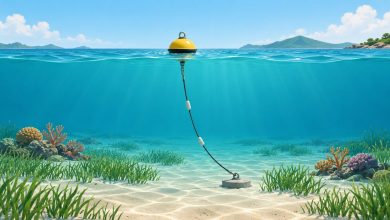
In 2025, approximately 120,000 in-situ measurements were carried out every day and 4,166 Argo floats were operational at the end of the year. However, some buoy networks and ship-based observation programs are being scaled back due to budget constraints and staff shortages.

This development presents a paradox: The faster the ocean changes, the more regions need accurate data to adapt their decisions.

The Starfish Barometer does not specifically describe the situation in Martinique. However, it highlights a global trend that no island can ignore.

For Martinique, the challenge is no longer simply a matter of preserving its natural heritage. It is now a matter of preparing the coastline, infrastructure, and economic activities for an ocean whose ecological balance will continue to change between now and 2050.


You can view it here The Starfish Barometer 2026

Related Articles

Back to top button