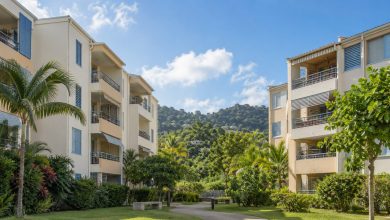
As we do every year, the DEAL (Department of Environment, Planning, and Housing) hosted leaders of environmental organizations to review progress on sustainable development, actions taken in the region, and initiatives by local organizations. This year, association leaders and program coordinators gathered at the Hôtel Batelière on Thursday, October 24. It was an opportunity to learn about several very positive pilot projects.

The program will include, among other things, a presentation of the pilot project carried out in Le Prêcheur to ensure the safety of its residents and revitalize its town center.
In fact, in the face of climate change and rising sea levels, this coastal town is already feeling the effects of these upheavals and is, moreover, located in an area prone to volcanic hazards. Through the documentary «Rasin Kas,» produced in 2019 by the Mo-TV association in collaboration with the city of Le Prêcheur and with support from DEAL, the public was able to discover what a town rebuilt with a focus on sustainable development might look like. This film gives a voice to the various stakeholders in the project, including residents of Le Prêcheur, scientists, architects, and others…And there, we discover how the city of tomorrow must be conceived as a whole—with energy and food self-sufficiency, the conservation of water and soil resources, active solidarity among the population and protection from natural hazards, and eco-friendly construction designed to harmonize with the local environment. DEAL Director Nadine Chevassus (see interview) spoke of «a comprehensive sustainable development project» and emphasized that local communities must be at the heart of the project and that all aspects of sustainable development are intertwined within it. The audience also reacted strongly following the screening, and project managers Gisèle Mondésir and Nadine François answered questions, particularly regarding the prospect of adding more riprap to the seawalls: «Survival breeds creativity, and experiences with rock-filling have shown that strong swells overwhelm these structures. We must now consider a different type of habitat. The goal is to live with nature and adapt to it.» This pilot project by the City of Le Prêcheur is part of the call for proposals, «Imagining the Coastline of Tomorrow,» and appears to be inspiring other coastal municipalities in Martinique; Trinité and Le Robert, Basse Pointe, and Le Carbet were mentioned in particular.
Next came the feedback sessions conducted by the various environmental organizations. Entreprise et Environnement presented its latest “clean-up” operations—waste collection efforts—with the goal this time of raising awareness among residents of isolated communities, even though, objectively speaking, they do not have access to the collection points traditionally set up in the Fort-de-France metropolitan area. This raised numerous questions about battery collection, which appears to be subject to quotas and inconsistent.
The organization, L’Arbre à Vie, gave a detailed presentation on the history of its efforts to combat illegal posting, in support of a «more beautiful Martinique.». Its director, Emmanuel Marie-Luce (see interview), emphasized the need to maintain the billboard management service they have established and to take further steps toward installing clean, sustainable billboards in collaboration with committed partners. As the pre-election period sees an increase in unauthorized posting, local governments could become more involved in this public service.
The event concluded with a very entertaining quiz on sustainable development, hosted and designed by the Carbet des Sciences association, whose mission is to bridge the gap between science and society. An audit commissioned by the DEAL had revealed that the DEAL’s buildings in Martinique were among the most energy-intensive in France. As part of this audit and the proposed solutions, the Carbet des Sciences developed this quiz for DEAL staff to encourage them to conserve energy. This interactive activity, based on questions and answers, demonstrates that when it comes to education on sustainable development, games are a powerful tool for raising awareness among both adults and children. Participants in the event enthusiastically took part in this unique game. Nathalie Laulé
Nadine Chevassus, director of the DEAL: «I feel like it’s taking hold and spreading slowly but surely!»
Martinique 2030: Do you see real progress in sustainable development—and particularly in addressing climate emergencies—in the behavior and initiatives of the public, various stakeholders, and elected officials?
DEAL Director Nadine Chevassus: Yes, really, I think we’re making progress—maybe not as fast as we’d like, but we’re definitely making progress! In Le Prêcheur, for example, we started with studies and design, and we’re now moving toward implementation. Based on a study that proposed a new layout drawing on written documents, plans, and drawings—and by bringing together residents, elected officials, experts, architects, and ethnologists around the table— we’ve now arrived at a scale model! With time, hard work, and collaboration, this model will undoubtedly lead to something concrete. We’re already starting to see concrete results, for example, with this idea of a “school-shelter,” which could serve both an educational purpose and as a refuge during major climatic or seismic events. It will provide shelter for the community for as long as necessary. I get the feeling that this idea is taking root and spreading slowly but surely!
M2030: Does this experience make Le Prêcheur a pilot or model community for all of Martinique? The project does, in fact, take into account all factors related to self-sufficiency and ensuring the safety of the population…
NC: Yes, we can consider Le Prêcheur to be a small experimental laboratory, and there’s nothing better than leading by example—because if it works in Le Prêcheur, it can work elsewhere. Here we have a community that’s getting involved, a motivated mayor, and change can only come from the community itself—it can’t be imposed. And that’s exactly what’s happening in Le Prêcheur. The DEAL and the Ministry of the Environment have proposed projects, but if the community and elected officials don’t take ownership of the project, it can’t be carried out. There are now other municipalities interested in this approach to envisioning the coastline of the future.
M2030: Who came up with the idea, and who launched this «Imagining the Coastline of Tomorrow» project?
NC: In fact, it was the Ministry of the Environment—specifically Minister Ségolène Royal—who issued this call for projects, to which the municipality of Le Prêcheur responded; since then, a new municipality has joined the initiative every year.
M2030: So things are really picking up! And what’s the latest news from the DEAL in Martinique?
NC : As you’ve seen, the UNESCO project—supported by both the CTM and the government—has been approved. This is great news, and there’s a very good chance it will result in a «UNESCO World Heritage Site» designation! I think this is something truly exceptional that deserves to be celebrated!
Interview by Nathalie Laulé
Emmanuel Marie-Luce, director of the association L’Arbre à Vie: «Just because he’s got a lot of clout doesn’t mean he has to put his sign in front of Titine’s house, blocking her view of the ocean. »We have to put a stop to this! It's the mayors' responsibility."
Martinique 2030: Following your remarks on illegal billposting, one question remains regarding «making Martinique more beautiful,» as you put it…After Hurricane Dean struck, there was a small movement against 4x3 advertising billboards, with a manifesto by intellectuals—notably Chamoiseau—who called on public authorities to address the visual pollution they cause. What is your position on this?
Emmanuel Marie-Luce: We’re fighting to make Martinique a more beautiful place. As part of our campaign against illegal posting, we had taken action against the surge in 4x3 billboards—just before Hurricane Dean struck! Everyone understood at the time that we had nothing against advertisers, because that’s a profession too! On the other hand, it’s not right for these signs to be put up just anywhere, any which way, and in ever-greater numbers! We raised this issue and met with the Natural Park; at that time, they suggested smaller signs, but then they kind of stifled our efforts on that project. Still, the mayors became aware of the problem and enacted a local ordinance on advertising.
M2030: Do you mean that the mayor decides where to place billboards in his municipality?
EML: It is the mayor’s responsibility to establish local advertising regulations, and at that point, we will work with the DEAL and other departments to determine the locations where advertising signs will be permitted. These will be locations that do not detract from the environment and do not inconvenience residents, so that we can put an end to this haphazard approach! This is a project we are familiar with, but it must now actually be implemented.
M2030: This type of display is certainly not going away anytime soon, given the economic significance of advertising in our consumer society…
EML: So we don’t want to be an economic obstacle, but what we want to tell our advertisers is that this must fall within a legal framework; Because normally, it’s the mayor or the prefect who approves the placement of these signs, yet that’s not happening, and the signs are popping up everywhere! We are calling on elected officials to warn them: be careful—we’ve seen with Dean that these signs have entered people’s homes and caused damage!
M2030: For example, in Le François, advertising signs are supposedly banned in the town, but there are signs everywhere—both large and small. It seems that violators could be fined, but this rule doesn’t appear to be enforced! So how does this actually work in practice?
EML: We have proposed standardized, code-compliant signage for local businesses to advertise in municipalities—signage that would pose no danger. What we’re telling the mayors is: be careful—the day a tragedy occurs, someone will be held responsible…The mayor of Le François knows full well that the solution we’re proposing has been discussed and agreed upon with state agencies, which allows us to have approved locations for installing the signs. Just because he’s got a lot of clout doesn’t mean he has to put his sign in front of Titine’s house, blocking her view of the ocean. We have to put a stop to this! It’s the mayors’ responsibility. We are reaching out to them to let them know that we can carry out this work in collaboration with the DEAL—which is responsible for preserving sites and landscapes—and with the gendarmerie, which will need to do its job. We don’t want to reprimand people, but rather let them know in advance how things work under the local advertising regulations; we’re ready to work with them…
Interview by Nathalie Laulé