«EXCELLENCE» AND «RELEVANCE» PUT TO THE TEST BY THE COVID-19 PANDEMIC
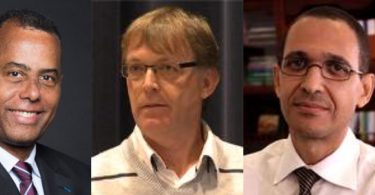
Xavier Maurange (XM) : Mr. Guy Claireaux, you are originally from Saint-Pierre-et-Miquelon, a professor at the University of Western Brittany, a researcher in marine biology, and you were a member of the EPUM (Equipe Projets UltraMarins) as part of the Assises des Outre-mer.
Mr. Pascal Saffache, you are from Martinique, a professor at the University of the Antilles, and you served as president of the University of the Antilles and French Guiana from 2009 to 2012. Your research focuses on the environment and the planning of micro-island areas.
Mr. Raymond-Julien Pamphile, you are originally from Martinique and serve as Scientific Advisor for Institutional Partnerships to the Director of the Curie Institute’s Research Center. You served as Secretary General of the High Council for Science and Technology, chaired by Jean Jouzel, from 2009 to 2013. You are a member of the interministerial task force responsible for planning the «research platforms» proposed following the Overseas Territories Conference.
All three of you advocate for a «reconciliation» between scientific excellence and relevance in the overseas territories. Could you tell us more about this and, in particular, outline the basis for your recommendations?
Modern science is primarily focused on the acquisition of knowledge and innovative technological developments. Scientific research is subject to very high quality standards. Despite gradual changes introduced in particular by the High Council for the Evaluation of Research and Higher Education and by the National Research Agency, the evaluation of researchers and their institutions remains primarily quantitative: the number of publications in peer-reviewed journals, presentations at international conferences, and patents serves as the primary benchmark. This research traditionally pays little attention to contextualizing the issues it addresses. This has often led to a failure to value research rooted in «the field» and, consequently, to neglecting or downplaying opportunities for social progress and economic development, particularly at the local level. Yet it is precisely at this level that the needs of the overseas territories are most pressing. It is in this context that we advocate for a model in which «excellence» and «relevance» would be two sides of the same coin—one that would ensure the overseas territories remain at the forefront of local and sustainable development for the well-being of their populations.
Broadly speaking, there are two approaches, each of which has its merits. The first is primarily driven by a commitment to excellence, as defined by international standards; its proponents hope that the results of their work will ultimately benefit everyone through trickle-down effects, though they do not set specific timelines for this.
The second, following in the footsteps of Albert Calmette, Louis Pasteur, and Marie Curie, is championed by advocates of research that—while itself excellent and highly rigorous in its intellectual approach and methodology—is also concerned with the potential applications of its work for the benefit of the public. It is this second approach that is linked to the concept of relevance. This concept is built on two key ideas: on the one hand, local ownership of projects and their objectives, and on the other hand, the prospect of social and economic progress within a reasonable timeframe.
The management of the first approach is more «centralized» (Jacobin), while that of the second is more «decentralized.».
The many specific challenges facing all of the overseas territories require the acquisition of knowledge that cannot be gained through short-term projects designed as part of a «programmatic» approach carried out at the national or international level. On the contrary, a «bottom-up» approach, based on proposals from the relevant overseas institutions, would be the most appropriate. The local focus of the scientific programming we advocate is based on the observation that it is currently very difficult to develop research projects that are relevant to the overseas territories if they do not align with the priorities of national or international research.
Because of this obligation to meet the objectives of calls for proposals that are poorly tailored to the overseas territories, these territories rarely serve as the commissioning entities or project managers for the scientific work conducted on their territories. However, taking ownership of research with a view to efficiently coordinating all overseas stakeholders should promote the economic development of these territories and even serve as one of its driving forces.
Of course, the issue of funding research projects specific to the overseas territories is an underlying concern. It is a fact that these types of projects are very difficult to fit within the framework of the usual calls for proposals issued by national and international funding agencies, and even less so within programs such as the Program for Future Investments (PIA)—though, it should be noted, the recent call for expressions of interest, one component of which is specific to the overseas territories: «Valorization – National Valorization Fund,» under the «Overseas Innovation Plan» component. To give an example: just recently, a PIA 3 call for projects aimed to create University Research Schools (EUR). Overseas universities were criticized in turn for lacking critical mass, being too dispersed (both geographically and thematically), and thus exhibiting scientific heterogeneity. These are, typically, observations based on criteria of excellence. Without questioning their validity, the question is whether, given their current trajectory, the overseas territories will ever be able to meet these criteria.
((XM): Is this reconciliation possible?
Yes, of course, our previous argument would not be complete if we did not point out that relevance obviously requires high-quality science. Nevertheless, returning to the two strategic approaches we have just presented, it should be noted that they differ not only in their objectives but also in the performance criteria they apply. It is important to clearly understand and take these differences into account if scientific research is to contribute to the economic and social development of the overseas territories. For a scientific project to meet the requirements of relevance, it must first be designed based on locally conducted analysis or foresight studies. Second, its progress and local impact must be measurable using rigorous, relevant, and reliable indicators. It is clearly this combination of requirements in terms of quality, local relevance, and local purpose that, in our view, defines research that is relevant.
So reconciliation is definitely possible!
((XM): Does this requirement take on a specific form in the overseas territories?
Reconciling excellence and relevance takes on its full meaning in the overseas territories. The Overseas Territories Conference, initiated by the President of the Republic, has sparked a strong mobilization among the people of the overseas territories. This genuine commitment stems in particular from the recognition that the overseas territories are indeed major assets in France’s vision for the world.
In this regard, and given the remarkable potential of the overseas territories—particularly in terms of their contribution to global biodiversity, their role in managing successive health crises, and France’s major strategic positioning thanks to its exclusive economic zones— research and innovation are central priorities for these territories. The recognized expertise of research teams and the quality of certain cutting-edge technology platforms make several institutions based in the overseas territories centers of excellence in academic research. Furthermore, they often offer exceptional conditions for studying intricate and complex phenomena.
At the same time, the overseas territories, situated at the crossroads of two dissimilar worlds—developed countries in the North and emerging countries in the South—have a dual identity that is a source of valuable strengths, but also of weaknesses. While they possess remarkable strengths (the true significance of which has not yet been fully assessed), they also face specific challenges (remoteness, isolation, a highly fragile economic situation, institutional arrangements, etc.). This explains why areas such as health, natural resources, energy and food dependence, pollution, and climate change find in the Overseas Territories unique capabilities for research and sustainable development that resonate particularly strongly.
An appropriate strategy should make it possible to combine excellence and relevance by finding a balance that benefits both basic research and local development. This approach reflects a strong desire among the populations of the overseas territories. Their ownership of coherent and useful projects is a key factor in their success.
Furthermore, according to the 2019 «Global Sustainable Development Report,» all countries in the world can be considered to be «on the path to sustainable development,» and the French overseas territories should serve as prime venues for international outreach and scientific diplomacy in this field.
The desired balance between excellence and relevance, on the one hand, and the dual identity mentioned above, on the other, could help highlight this remarkable asset and make these regions pioneers in sustainable development. They would operate within their respective geographic regions, on the one hand by establishing robust cooperation programs with the most advanced or emerging countries recognized for their scientific excellence, and on the other hand by helping to build the capacity of the least developed countries in their vicinity.
(XM): Are your ideas already resonating with others or taking shape in some way?
We must emphasize that our discussion is not intended to be doctrinal. It is part of a broader movement that spans many fields of research. This movement has contributed to a growing awareness that is evident through various subtle signs in the academic, economic, environmental, and, of course, health sectors.
At the Higher Education, Research, and Innovation Conference (RUE 2019) organized by the specialized news agency AEF info last November, a report compiling the «10 Trends » for higher education, research, and innovation (ESRI) in 2020 was published: one of them (Trend # 3: The ESR Landscape) was specifically titled «As Higher Education Becomes Increasingly Metropolitan, the Value of the Local Region Is on the Rise.».
Focusing more specifically on the overseas territories, it is worth noting that this requirement appears to have been taken into account. Indeed, Measure 20 of the Blue Book, which followed the Overseas Territories Conference, aims to achieve: «A better structuring of research [that] should enable the overseas territories to assert themselves as pioneering regions at the forefront of sustainable development and local development goals.» To this end, the creation of a «research platform» is planned in each of the three geographic regions to improve the organization and coordination of research and training, and also to promote their influence at the regional and international levels.
While we support the vision that the overseas territories should become pioneers in the field of research, as outlined in the Blue Book on the Overseas Territories, we are firmly convinced that it would be inappropriate—and might even prove unreasonable—to transpose strategies from a continental environment to an island environment or an isolated continental area. We strongly hope that this principle will be one of the guiding principles in the design of these «research platforms.».
The overseas universities consulted as part of the Overseas Territories Conference expressed this same concern by identifying priority issues specific to their territories, such as health and sustainable energy development.
At the 6th Overseas Conference held on December 11, 2019, at the initiative of the AFD, the IRD, and the CEROM, the IRD’s Honorary President and CEO, Professor Jean-Paul Moatti, emphasized: «In the face of these challenges—reducing inequalities, adapting to climate change, and preserving biodiversity—mobilizing research and encouraging innovative initiatives seem essential. The goal is to develop new solutions to promote the sustainable development of these territories.».
The issue of better coordination between research and development activities (local and sustainable) in the overseas territories was discussed during the roundtable titled «How Can We Improve Research Practices to Enhance Their Impact?» at which Dr. Raymond Julien Pamphile spoke.
To summarize our point, the need for «reconciliation» between scientific excellence and relevance clearly resonates in the overseas territories. For this reconciliation to become a reality, national strategies must effectively incorporate the realities of the overseas territories. The success of this approach also depends on the performance of our universities and the dynamism of local research communities. This observation is in line with that of the Conference of University Presidents (CPU), which calls for greater recognition of the role universities play in their respective regions.
With this in mind,
- Is it necessary to emphasize the need to make overseas universities more attractive?|
- Should the traditional evaluation mechanism for UMRs—which makes it difficult to accredit overseas institutions—be rethought? While respecting the autonomy of overseas institutions, should we further explore the possibility of certifying UMRs that, during their initial phase, bring together overseas universities with laboratories based in mainland France and supported by research organizations—provided that these overseas universities retain control over their own trajectory, balancing excellence and relevance?
- Is it necessary to reaffirm the need to establish or strengthen cross-functional interactions and cooperation across all overseas territories and with territories located in the same geographic region?
The goal of these initiatives would obviously be the co-design of strategic interdisciplinary projects that would make it possible to study common issues at the geographic basin level, through an integrative approach that combines cutting-edge technologies and the pooling of resources.
(XM): Aside from this project to establish «research platforms,» do you have any other concrete examples of research activities being conducted in the overseas territories or that could be conducted there, reflecting this balance between «excellence» and «relevance»?
To be perfectly precise, future «research platforms» will only be able to contribute to this reconciliation if they are part of a proactive research and innovation policy that takes into account the realities of the overseas territories. This integration requires ongoing dialogue with all relevant overseas institutions and all stakeholders involved in a collaborative process, including the Overseas Academy of Sciences. We are therefore calling for a paradigm shift—an innovative model based on a «Living Lab» approach to addressing certain issues.
Undoubtedly, research projects focusing on topics such as public health (prostate cancer in the context of chlordecone, diabetes, obesity, perinatal mortality, emerging vector-borne diseases, etc.), the environment and the protection of global public goods (maintaining biodiversity, combating Sargassum algal blooms, preserving coral reefs, improving air and water quality, management of seal and great white shark populations…), as well as the development of industrial activities (fishing, aquaculture, agri-food, etc.) will be contextualized differently depending on whether prospective and feasibility studies are conducted by the overseas territories themselves or thousands of kilometers away from those territories.
It is therefore essential to avoid a complete disconnect from the needs and expectations expressed locally. For example, all future research programs concerning Sargassum algal blooms or soil contamination by chlordecone—no matter how ambitious or enthusiastic they may be—must constantly be situated within the context of the French overseas territories. From a methodological standpoint, it is essential that the initial hypotheses take into account the priorities, local histories, and economic and social realities of these territories.
To ensure that research in the overseas territories is also research for the overseas territories, we believe it is essential that connections to local issues be established from the very outset of project design and not be limited to a few hastily drafted statements at the end of the project. For scientific research to be relevant to the overseas territories, it is therefore essential that strong participation from the overseas territories become the norm—a key to ownership and contribution to local development. We believe it is essential that this participation be part of a continuum: from the creation and funding of research institutions to the evaluation of scientific projects, including the drafting of calls for proposals and the strategic plans on which they will be based.
In addition to the expected positive outcomes of this pragmatic approach, there is the tremendous boost it could provide in terms of making scientific and technological careers more attractive to students in the overseas territories. This would give them more local opportunities for internships and career paths.
(XM): Why does the COVID-19 pandemic reinforce your conviction?
France’s overseas territories have been affected by the COVID-19 pandemic, though with a time lag compared to mainland France. Like many developing or emerging countries, they were hit by an imported economic shock even before COVID-19 spread among their populations—if only due to the collapse of the tourism sector. Indeed, as we have emphasized, the overseas territories are closely linked to the developed countries of the North (particularly European states, as they are French departments or territories) but resemble developing countries in the Global South in more ways than one, given their GDP, geographic environment, unique histories, and socioeconomic and demographic characteristics.
According to EUROSTAT data, the average GDP per capita in the overseas territories is significantly lower than that of mainland France. The economic fabric of the overseas departments consists primarily of small and even very small businesses. It is associated with significantly higher rates of poverty and economic insecurity than in mainland France. This already strained socioeconomic situation makes managing the health crisis more challenging: lockdown in precarious housing is a real challenge, especially since it results in the loss of indirect and fragile means of subsistence; the lack of regular access to drinking water makes it particularly difficult to implement certain preventive measures, and the high number of comorbidities and the coexistence of other infectious diseases place additional strain on the healthcare system. Furthermore, maintaining an air bridge with mainland France is essential for the delivery of medical and protective equipment, and medical evacuations are more difficult. It is therefore feared that, directly or indirectly, this epidemic will have a particularly serious impact on the overseas territories.
This major health crisis underscores, if any further proof were needed, the extreme fragility of the socioeconomic development model in the overseas territories and, therefore, the need to devise a new paradigm. This is precisely what the panelists suggested last December during the roundtable discussion titled «On the Need to Rethink the Socioeconomic Development Model for the Overseas Territories» at the 6th Overseas Territories Conference. This suggestion is fully in line with Trajectory 5.0, which aims to define a new way of building (co-building) the overseas territories of tomorrow.
It is essential to anticipate this development of the Overseas Territories at a time when we must begin to outline the contours of the «world after the crisis» (the world of rebuilding?), in which we will need, in particular, strengthened research strategies on viruses and vaccines, coordination among global, European, and national authorities for the public management of potential pandemics, new modes of production, and strategic industries that have been relocalized and are committed to environmental standards.
Acknowledgments
The authors would like to express their gratitude and sincere thanks for the valuable suggestions and encouragement they received from:
Véronique Bertile, Maître de conférences en Droit public à l’Université de Bordeaux, Directrice de la Licence en Droit, Ancienne Ambassadrice déléguée à la coopération régionale dans la zone Antilles-Guyane
Michel Boyon, Membre de l’Académie des sciences d’outre-mer, avocat au barreau de Paris, Conseiller d’État honoraire
Bernard Jégou, Directeur de la Recherche de l’Ecole des Hautes Etudes en Santé Publique, Directeur de Recherche Emérite de classe exceptionnelle à l’Inserm, Ancien Président du Conseil scientifique de l’Inserm (2008 – 2012)
Jean Jouzel, Directeur de Recherche au CEA, membre de l’Académie des sciences et du Conseil Economique, Social et Environnemental, Ancien Président du Haut Conseil de la Science et de la Technologie (2009 – 2013), Ancien Vice-président du groupe de travail scientifique du GIEC, organisation co-lauréate du Prix Nobel de la Paix en 2007
Gaël Lagadec, Président de l’Université de la Nouvelle-Calédonie, membre de l’EPUM (Equipe Projets UltraMarins) dans le cadre des Assises des Outre-mer
Pierre Lise, Préfet honoraire, co-organisateur avec Ferdinand Mélin-Soucramanien du colloque « Outre-mer et devise républicaine » (Le Sénat, 2011)
Jean-Paul Moatti, Professeur Emérite Aix-Marseille Université, Ancien Président-directeur général de l’IRD
Robert Picard, Référent Santé du Conseil général de l’économie, de l’industrie, de l’énergie et des technologies (CGEIET) au Ministère de l’Economie et des Finances
Alain Puisieux, Directeur du Centre de Recherche de l’Institut Curie
Bernard Ramanantsoa, Directeur Général honoraire de HEC Paris, membre de l’EPUM (Equipe Projets UltraMarins) dans le cadre des Assises des Outre-mer