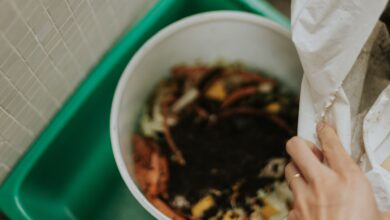
Food waste accounts for approximately 32 % of the region’s residual household waste. Two years after the widespread implementation of source separation for organic waste, reducing and recycling it remains a major challenge. Peels, leftovers, and uneaten food: food waste still makes up a significant portion of the gray trash bin.
The characterization study conducted in 2024 at the request of ADEME Martinique estimates that they account for approximately 32 % of residual household waste. Based on the analysis of 146 samples, this study is intended, in particular, to help guide waste reduction policies and determine the appropriate scale of recycling facilities. Above all, it highlights the significance of a waste stream that could, at least in part, be diverted to alternative uses.
Prevent Before Recycle
Not all food waste is the same. Some types are difficult to avoid, such as peels, pits, or scraps from food preparation. Other types are simply waste: food that is still edible, products thrown away before being used, or portions prepared in excess.
This distinction is essential. Composting should not make us forget that Prevention remains the top priority. Better meal planning, saving leftovers, and adjusting portion sizes can help reduce waste before it is even created.
This initiative applies not only to households but also to restaurants, hotels, cafeterias, and healthcare facilities. For these organizations, tracking the volume of food waste can help identify losses and adjust purchasing or portion sizes.
The quality of the sorting determines what happens next
As of January 1, 2024, local governments must provide residents with a solution for sorting organic waste at the source. The regulations do not mandate a single model. Individual or shared composting, drop-off sites, and separate collection can be combined depending on the characteristics of each area.
However, the mere presence of equipment does not guarantee its effectiveness. The Quality of Sorting determines what can be done with the recovered materials. Plastic bags, packaging, or other unwanted items can complicate the processing, increase costs, and degrade the compost produced.
Simple guidelines and regular support are therefore essential. Residents and business owners need to know what types of waste are accepted and how to store them. One-time awareness campaigns are not enough to establish new practices in the long term.
An organization tailored to local realities
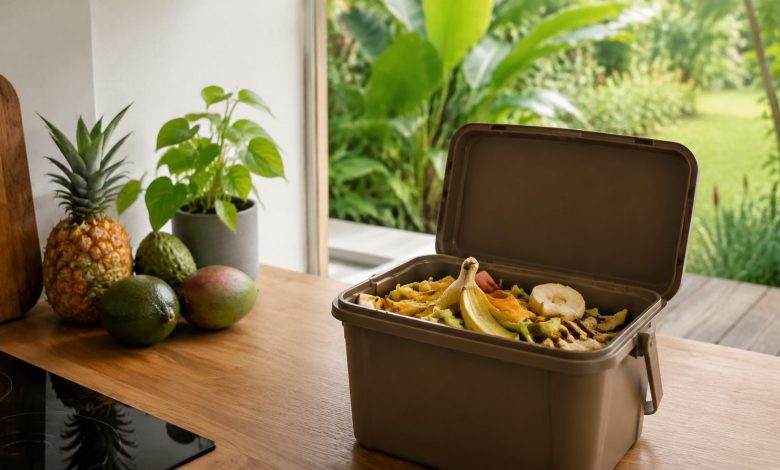
Biowaste is moist and compostable. Collecting it requires appropriate containers, regular maintenance, and appropriate collection frequencies. In a hot and humid climate, Special attention must be paid to storage and odor prevention.
Solutions must also take into account the types of housing. Individual composting may be suitable for some homes with yards, but not for all multi-unit dwellings. In denser neighborhoods, shared composting, voluntary drop-off, or separate collection may be more appropriate.
Professionals who produce large volumes also have specific needs. A restaurant, a market, or a central kitchen cannot be supported in the same way as a household. Therefore, there is no one-size-fits-all solution for the entire country.
Sorting is just the beginning of the process
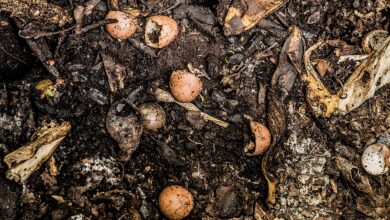
Once they've split up, Biowaste must be directed to a system capable of recycling it. On-site composting allows some of the waste to be processed where it is generated, but it requires space, maintenance, and monitoring of the materials added.
For larger quantities, Appropriate facilities and market opportunities for the compost produced are necessary. Simply distributing compost bins or setting up collection points is therefore not enough: it is also necessary to know the quantities collected, monitor their quality, and track where they end up.
Progress can be measured using several indicators: population served, volume diverted from the gray trash bin, sorting errors, amount of compost produced, and changes in residual waste.
Two years after the requirement took effect, the challenge now is to move from the announced measures to measurable results. Reducing food waste in the gray trash can requires action across the entire chain: prevent waste, simplify sorting, adapt collection methods, and ensure genuine local recycling.
Source: UNICO – Food Waste: Sorting, Collection, and Tracking – Requirements and Best Practices for Local Governments and Private Entities