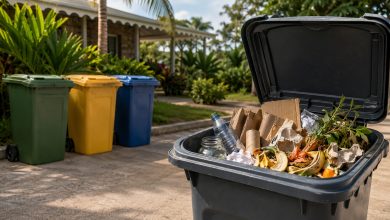
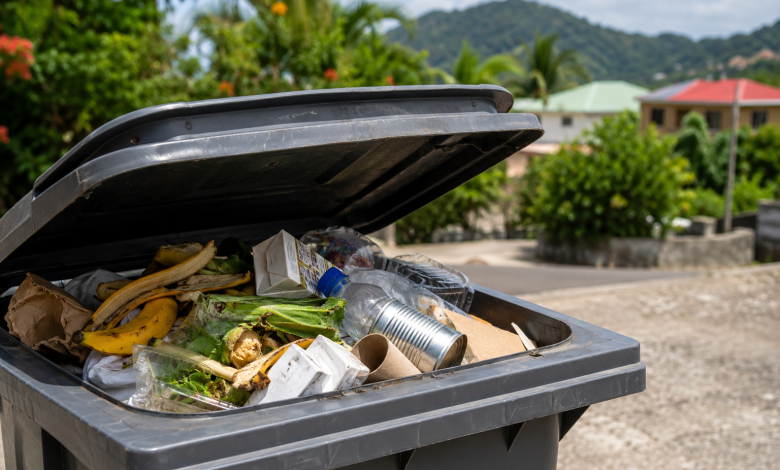
In Martinique, the average amount of gray trash per capita per year is 341.4 kg. However, its composition shows that only a small portion of this volume actually consists of residual waste. Food waste, packaging, and recyclable materials still make up the bulk of the trash. What’s actually in the gray trash bin in Martinique? An analysis of residual household waste, reported by the SMTVD and based on ADEME’s MODECOM study, highlights the still considerable amount of waste that could be diverted to other streams. Food waste, packaging, and recyclable materials make up the bulk of the bin’s contents. In total, about three-quarters of its content could be avoided or diverted to sorting, recycling, or recovery programs. This snapshot reveals that there is still significant room to reduce the residual waste stream in the region.
—
341.4 kg per capita, a large portion of which could be diverted to other uses
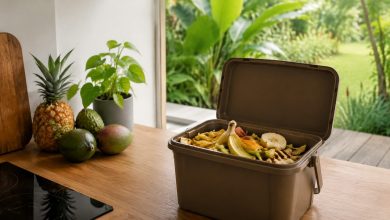
The food waste are one of the main types of artifacts found in the Martinique "gray trash." They measure 111.4 kg per person per year and represent 32 % of content.
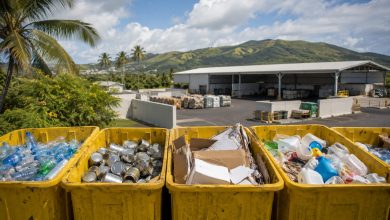
Packaging also plays an important role. The analysis reveals that 99.1 kg per capita per year for a portion consisting of packaging waste, plus other recyclable materials identified as being in the bin.
The issue, therefore, goes beyond the mere question of the volume of waste produced. A significant portion of what currently ends up in the residual waste stream consists of materials for which other solutions may exist: separate collection, recycling, composting, organic waste recovery, or source reduction.
This interpretation aligns with the very purpose of the MODECOM campaigns developed by the’ADEME : Accurately characterize waste in order to inform technical and organizational decisions as well as the monitoring of public policies.
The national MODECOM 2024 campaign covers metropolitan France, while the overseas departments and regions (DROM-COM) are the focus of campaigns specific to their territories.
Food waste amounts to more than 111 kg per capita
With 111.4 kg per person per year, food waste is a major issue for the gray trash in Martinique. It accounts for nearly one-third of the total.
Within this deposit, the characterization also reveals 21.7 kg of food waste per person per year. These two figures should not be confused: total food waste is not the same as wasted food. However, the presence of avoidable food items in the bin points to a specific opportunity for reduction at the source.
The size of this group also raises the question of its political orientation. Since the January 1, 2024, the separation of organic waste at the source is a key pillar of waste management policy.
In its MODECOM 2024 summary, ADEME notes that these materials can, in particular, be directed toward organic recovery through composting or anaerobic digestion. In the metropolitan area studied by the Agency, biowaste still accounts for 32 % of residual household waste, or 71.2 kg per capita per year.
This similarity in proportions to the data from Martinique should not obscure the difference in scope between the surveys. It does, however, highlight the persistent proportion of organic waste in gray bins.
Significant potential beyond the residual flow
The photograph of the trash bin in Martinique ultimately highlights several distinct areas of focus. Food waste relates to source separation, composting, and waste prevention. Packaging falls under separate collection and recycling programs. Other materials may be directed to specific recycling streams.
The 2024 MODECOM report shows that this issue extends far beyond Martinique. In metropolitan France, ADEME estimates that 69.1 % of waste collected from residual household waste do not belong there and should be directed to other collection sites.
The average composition there includes, in particular, 32 % of food waste, 27 % of non-glass packaging and paper, 5 % of glass packaging and 6 % waste that is part of other collection programs.
In Martinique, the situation is even more evident: on the 341.4 kg per capita per year found in the gray trash can, 84 kg ...are the only ones classified as residual waste. The characterization, therefore, does not measure only what is thrown away.
It also provides a concrete indication of the volume of materials that could still be diverted from the residual waste stream through prevention, sorting, and recycling.