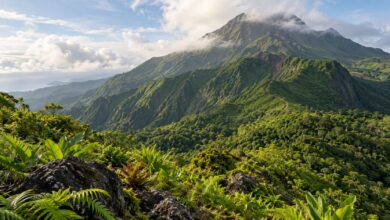
«The Martinique coastline also holds thousands of childhood memories—beaches, scents, light, and simple moments that stay with us.»
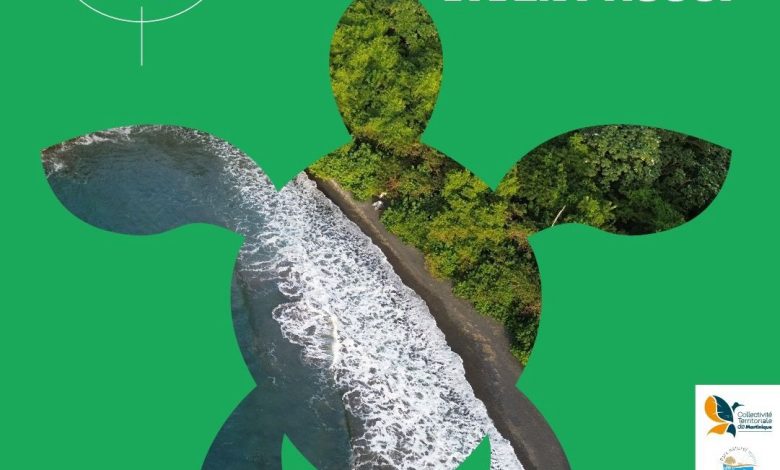
Our coastline is not just a backdrop. It is part of our lives, our memories, our economy, and our sense of balance. But it is becoming increasingly vulnerable. Between erosion, the effects of climate change, more severe weather events, and incidents of incivility that are still all too common, Protecting our coastlines is becoming a shared responsibility. That is the message behind the campaign launched by several Martinican companies and institutions, which Antilla wishes to support by offering to publish these visuals free of charge in its print magazines.
There are some topics that immediately resonate, because they speak to both the heart and the public interest. The coastline of Martinique is one of them. One need only think of a beach from one’s childhood, a family outing, a familiar bay, or a mangrove forest walked through in silence to understand that these places are not merely beautiful. They connect us to something deeper: our environment, our memories, and a certain vision of our homeland.
But this beauty will not last forever if it is not protected.
Martinique’s coastline stretches over 450 kilometers, featuring a wide variety of shorelines and more than a hundred beaches. This area is currently facing significant environmental and human pressures. Our island is directly affected by coastal erosion and increasing coastal risks amid global warming and rising sea levels.

A natural heritage that also protects the country
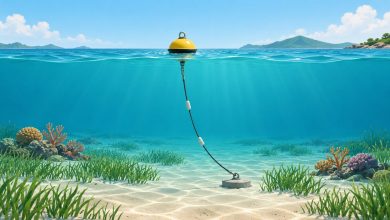
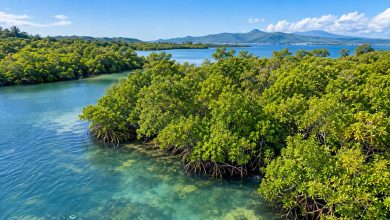
Protecting the coastline is not just about preserving beautiful landscapes. It’s also about safeguarding natural habitats that play a concrete protective role. Mangroves, seagrass beds, and coral reefs form invaluable natural barriers. They are home to biodiversity, dampen some of the swell, help maintain coastal stability, and provide numerous ecological services to the region. In Martinique, the coral reefs stretch for about 70 kilometers, while mangroves also play a vital role in protecting the shoreline.
«When mangroves, reefs, and seagrass beds deteriorate, it’s not just nature that’s in decline—it’s also our collective protection that’s weakening.»
We sometimes forget that these areas provide very tangible benefits. They slow erosion, serve as a refuge for many species, and contribute to the quality of the marine environment. Their fragility therefore calls for increased vigilance, especially since some damage also stems from everyday actions: littering, failure to respect sensitive areas, and repeated harm to already vulnerable habitats.
Key Takeaways
- More than 450 km of the coastline in Martinique.
- 49 km Sections of the coastline appeared to be eroding in the BRGM baseline report published for the period 1951–2010.
- About 70 km artificial reefs built around Martinique.
- The mangroves of Martinique accounted for approximately 2,215 hectares in a landmark study covering the period 1951–2010.
Climate change is no longer an abstract concept
Climate change is no longer a distant or theoretical issue. It is already putting greater pressure on coastal areas. Martinique’s coastline is particularly vulnerable to coastal erosion.
This context makes prevention all the more important. It’s not just a matter of fixing things after the fact. We also need to provide better information, raise awareness, and encourage respectful behavior before the damage becomes irreversible. That is precisely the purpose of communication campaigns like the one currently circulating on LinkedIn: to remind people, in simple terms, that the coastline is a common good.
 A simple, clear, and useful campaign
The message behind this campaign is accessible to everyone, and that is its strength. It is based on three easy-to-understand ideas. First, learn more about the biodiversity of Martinique’s coastline to understand what we are protecting. Second, adopting the right habits in daily life, because small, repeated acts of negligence eventually lead to major damage. Finally, reminding people that protecting the coastline is a collective responsibility.
«Protecting the coastline isn’t just about saving a postcard-perfect view. It’s about preserving our way of life, our shared heritage, and a part of our future.»
This approach is sound. It avoids grand, disconnected rhetoric. It speaks to reality. In Martinique, the coastline is at once a natural space, an economic space, a social space, and an emotional space. It sustains economic activity. It supports daily life. It connects residents to their personal and collective history. Protecting it, therefore, means defending much more than just a landscape.

Key Figures
452 km: This is the coastal stretch mentioned in the Environmental Profile of Martinique.
33 km: This is the portion of the coastline that is eroding, according to this same environmental summary document.
17 municipalities: This is the number of municipalities along the Caribbean and southern coasts affected by the aftermath of Hurricane Beryl, according to government agencies in 2024.
martinique2050 and Antilla want to help spread the word about this campaign
In the face of this challenge, everyone can take action at their own level. Institutions have a role to play. So do nonprofit organizations. And so do businesses.
Finally, the media have a special responsibility: to disseminate useful information, highlight positive initiatives, and help ensure that essential issues remain at the forefront of public debate.
With this in mind, together with Antilla, we let's do our part. We propose to publish these visuals in print in our magazines and on our websites to expand the reach of this campaign and convey this message of shared responsibility to a wider audience.
This is not merely a symbolic gesture. It is an editorial commitment rooted in a simple conviction: raising awareness matters, especially when it concerns the immediate environment of the people of our Martinique.
Preserve today, to pass on tomorrow
Martinique’s coastline deserves better than indifference. It deserves attention, respect, education, and perseverance. It deserves that we face its fragility head-on—without unnecessary alarmism, but also without downplaying the damage that is occurring.
Because, at the end of the day, protecting the coastline means protecting what we have inherited and what we want to pass on. A magnificent island, yes. But above all, a vibrant, inhabited, and beloved land, whose shores tell the story of both our past and our future.
Philippe PIED