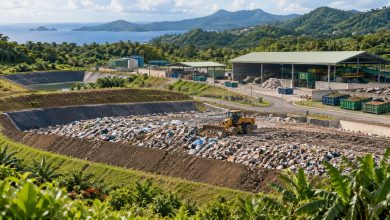
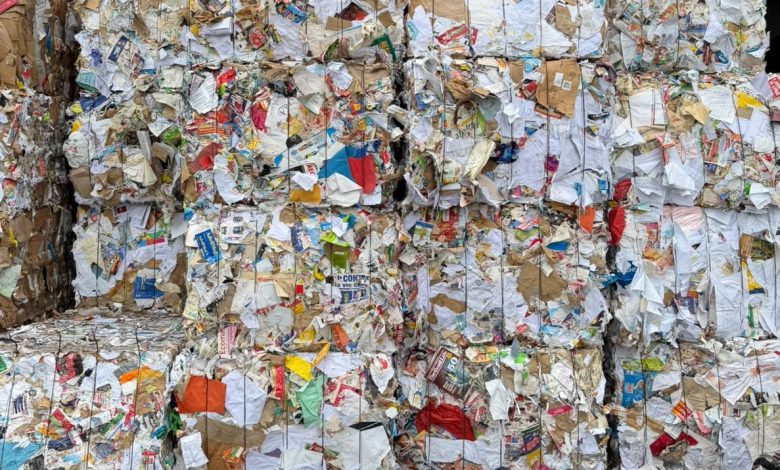
A half-day workshop was held on Monday, June 29, at the Ducos packaging sorting center, focusing on a very practical question: What actually happens to our waste in Martinique? The initiative, led by ADEME Martinique, Martinique Recyclage, and Entreprises Environnement, is part of the “Quinzaine du Réseau des élus pour agir” (Fortnight of the Network of Elected Officials for Action). It comes at a time when waste management remains one of the island’s major environmental, economic, and regional challenges.
The question is simple, but it touches on the entire issue of land-use planning:
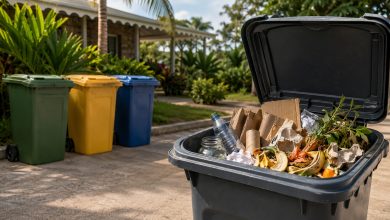
What happens to our trash once it's put in a trash can, a recycling bin, a recycling center, or a collection point?
It is around this question that the Regional Directorate of ADEME, Martinique Recycling and Business and the Environment invited Martinique's elected officials to meet on this Monday, June 29, 2026, from 8:30 a.m. to 11:30 a.m., at the packaging sorting center located in the Canal Cocotte area in Ducos.
A meeting reserved for elected officials
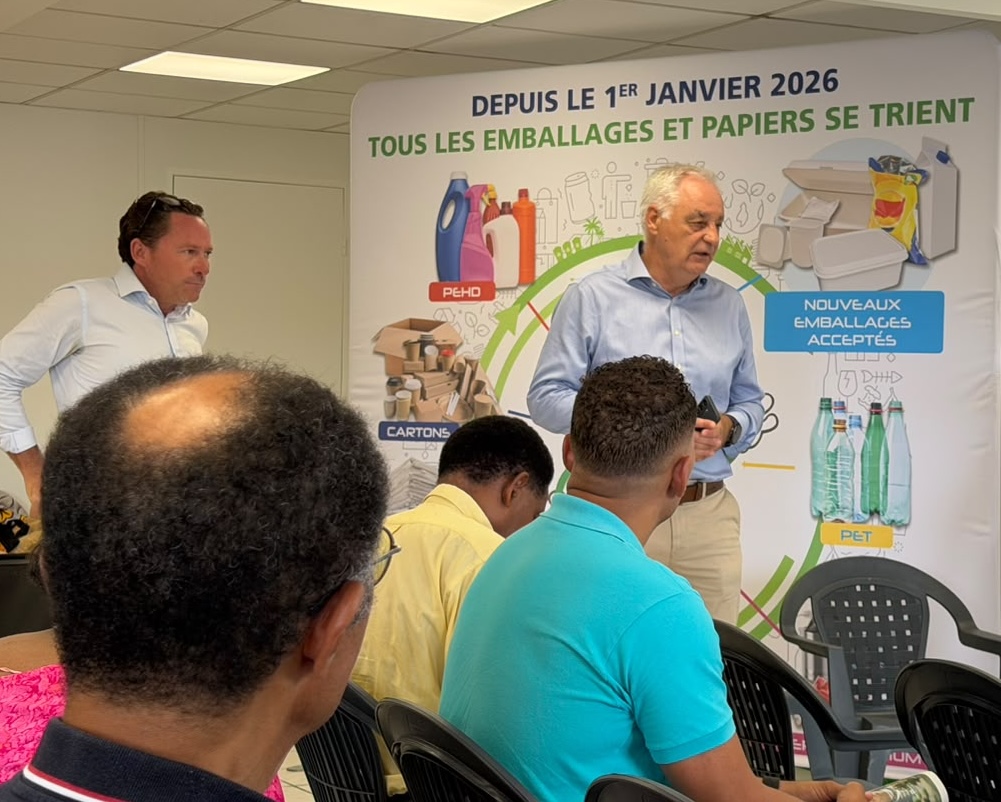
This event is intended for elected officials. The limited number of seats—40—reflects the organizers’ desire to prioritize an intimate setting, featuring direct discussions, on-site visits, and concrete answers to participants’ questions.
Understanding the Actual Path of Waste
Here's what's on the agenda for this half-day session: information, discussions, and site visits. The goal is to gain a better understanding of the entire waste management chain in Martinique, from the sorting process to the various disposal options.
Participants discussed several key topics: waste management in the region, various treatment methods, recovery solutions, home composting, EPR programs—that is, Extended Producer Responsibility programs—as well as the OTRI app, which helps guide users to the correct collection points.
The meeting also included two important visits:
- the packaging sorting center
- that of the plaster recycling facility.
The recycling center: the cornerstone of our daily routine
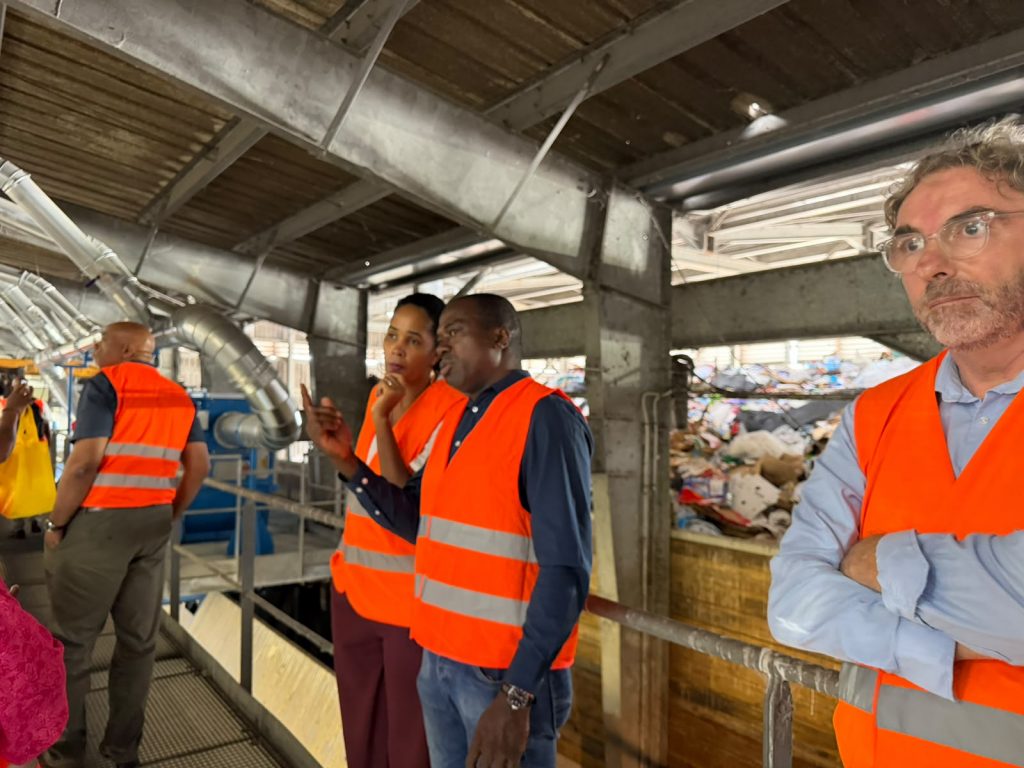
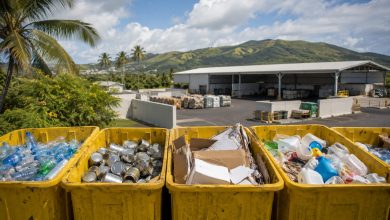
The Ducos packaging sorting center is a strategic facility. This is where packaging collected through selective sorting arrives, before being separated, sorted, and prepared for recycling or energy recovery.
This tour gave elected officials a firsthand look at what happens after waste is deposited in recycling bins or drop-off stations. It also provided an opportunity to better understand common mistakes, technical constraints, the system’s limitations, and the efforts needed to improve the quality of recycling.
For local governments, this step is essential. Improper sorting can lead to rejected materials, additional costs, and reduced material recovery. Conversely, better sorting practices help reduce the volume of waste sent to landfills or incinerators, while strengthening local recycling systems.
Plaster Recycling: An Example of a Local Supply Chain
A Tour of the Plaster Recycling Facility was another highlight of this half-day event. Plaster is a significant source of waste, particularly in the construction and building trades. Managing it poses specific challenges, as it cannot be treated as ordinary waste.
Implementing a local recycling solution helps reduce waste exports, limit logistics costs, and further align Martinique with the principles of a circular economy. For an island territory, this issue is crucial: each local sector avoids, whenever possible, relying solely on external disposal options.
REP Programs: An Issue That Is Still Little Known
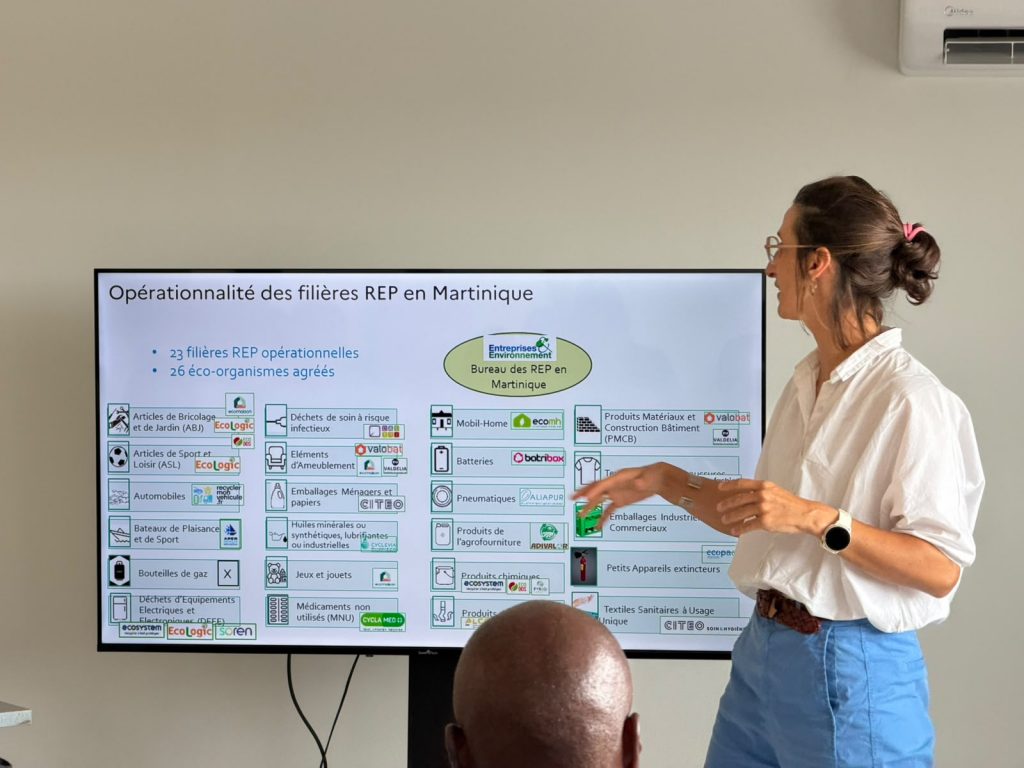
The meeting also addressed EPR (Extended Producer Responsibility) schemes. The principle is as follows: producers, importers, or distributors of certain products must contribute to the management of those products at the end of their life cycle.
These waste streams include many types of everyday waste: packaging, batteries, electrical equipment, furniture, textiles, chemicals, tires, and construction materials, among others. They are essential for organizing the collection, sorting, and processing of waste that should not end up in conventional waste streams.
In Martinique, the rollout of these systems presents significant challenges: geographical remoteness, market size, transportation costs, the need for appropriate infrastructure, and the need to inform the public. For elected officials, a better understanding of these systems is essential in order to support residents, businesses, and local organizations.
OTRI, a practical tool to better guide users
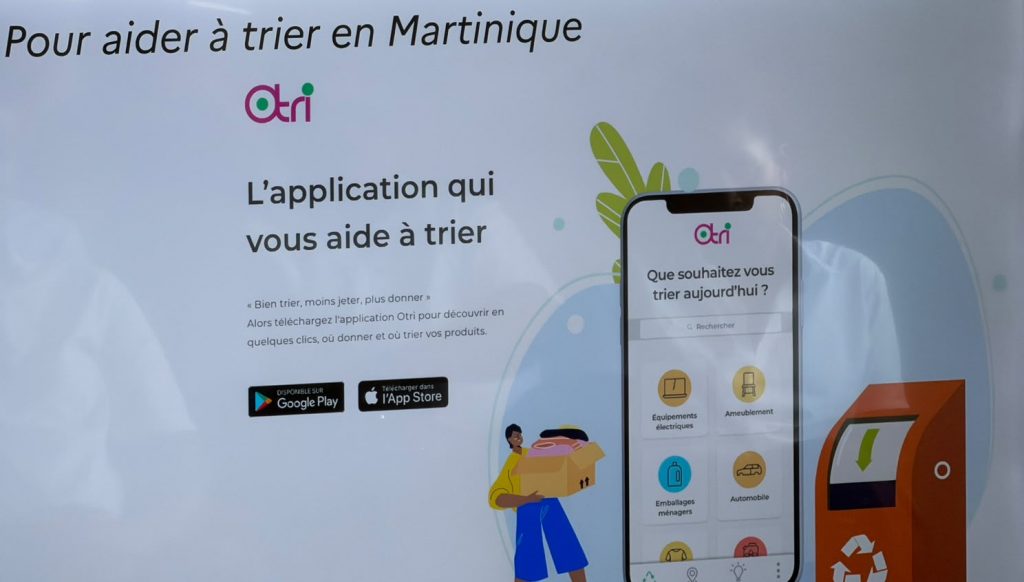
The OTRI app is one of the tools featured. It allows users to locate collection points in Martinique and identify available options based on the type of item or waste: donate, repair, recycle, or drop off at the right location.
Its purpose is very practical. Many residents don’t always know where to dispose of electrical appliances, furniture, batteries, clothing, materials, or items that are still usable. OTRI aims to simplify this process by making information more accessible to users.
For local governments, this type of tool can also serve as a useful means of raising awareness. It helps prevent illegal dumping, directs waste streams to the appropriate entities, and promotes reuse when an item is still usable.
Home Composting: Key to Waste Reduction
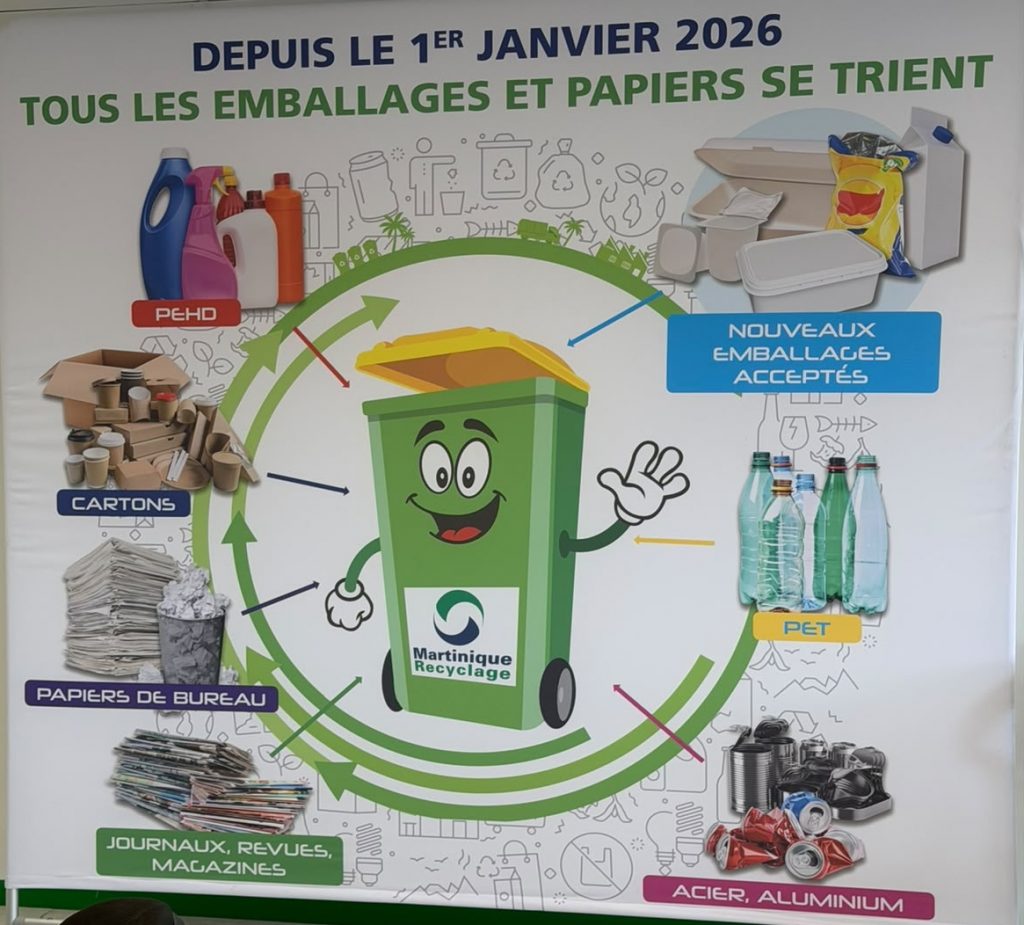
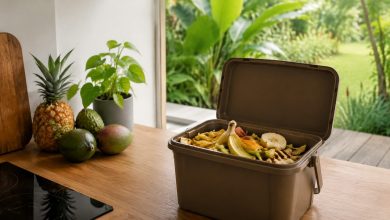
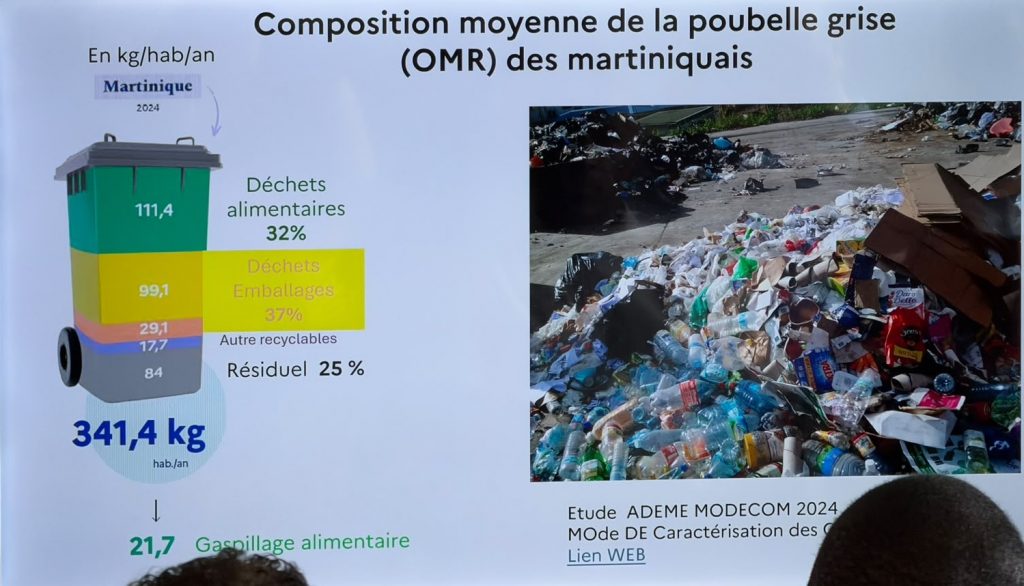
Another topic discussed: home composting. This is an important lever, because a significant portion of the waste generated by households consists of biowaste: food scraps, peelings, and yard waste.
When this waste is composted, it is no longer sent through conventional treatment systems. Instead, it can become a resource for gardens, soil, and certain agricultural or household practices.
In Martinique, where issues related to land use, transportation, storage, and waste recovery are particularly sensitive, reducing waste at the source remains a priority. Composting isn’t a cure-all, but it allows for very concrete action at the household, neighborhood, school, community garden, and local government levels.
A Matter of Territory, Not Just Technique
This half-day event is not just a tour of the facilities. It raises a broader question:
How can we organize waste management on an island in a way that is more efficient, more transparent, and more responsible?
Martinique faces significant challenges: limited space, high costs, scattered waste streams, the need to reduce final waste, the need to develop local waste management systems, and the ongoing need to raise awareness among residents and businesses.
In this context, elected officials play a central role. They are on the front lines when it comes to explaining guidelines, supporting infrastructure, sharing best practices, integrating waste management into public policy, and facilitating changes in behavior.
An Essential Teaching Method
The event held in Ducos also serves as a reminder of a simple truth: to sort waste properly, you have to understand. You need to understand where the waste goes, what happens to it, why certain actions are helpful, and why others make the operators’ jobs more difficult.
Waste sorting is not just an administrative requirement. It is a collective process. It begins in homes, businesses, government offices, and schools. It continues in trucks, sorting centers, resource recovery facilities, specialized processing channels, and recycling solutions.
By bringing together elected officials, institutional stakeholders, and professionals in the field, ADEME, Martinique Recyclage, and Entreprises Environnement aim to help raise the profile of this supply chain. This is essential for improving practices and building public trust.
A valuable event for local decision-makers
With new deadlines just a few months away and against a backdrop in which issues related to the ecological transition are playing an increasingly prominent role in public policy, this half-day event is part of a highly practical approach.
It enables elected officials to leave with a clearer understanding of existing tools, on-the-ground constraints, and areas for improvement. It should also foster direct dialogue with the stakeholders who handle, recover, recycle, or divert waste on a daily basis.
Waste management is often viewed through the lens of its shortcomings: illegal dumping, bulky waste, capacity issues, incivility, and costs. This meeting also provides an opportunity to look at the other side of the issue: the recycling systems that are taking shape, the facilities that are operating effectively, the local solutions that are making progress, and the need for a shared commitment.
Because behind the question «What happens to our waste?» lies another question:
What kind of Martinique do we want to build, in terms of how we produce, consume, discard, reuse, and recycle?
Philippe PIED