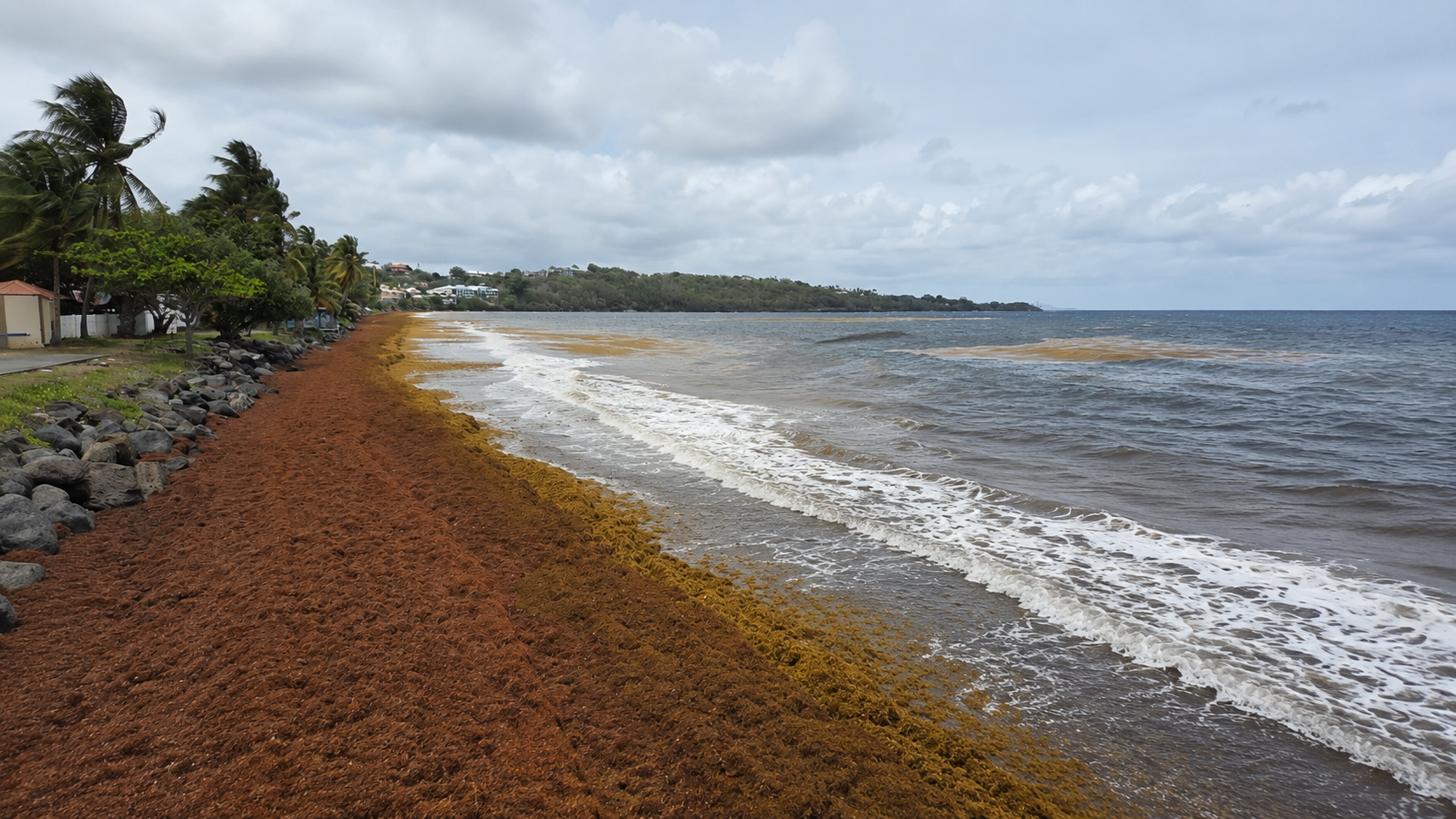
While Sargassum arrivals are expected to become less frequent after the seasonal peak, the issue of managing it remains far from resolved in Martinique. Once the seaweed has been removed from the coastline, questions remain regarding its storage, the treatment of the liquid produced during decomposition, and its potential reuse. The evaluation of the Sargassum Plan II 2022–2025 notably highlights that none of the eight storage sites in Martinique currently meets all the criteria required to comply with appropriate environmental standards.
Eight sites, but storage capacity remains fragile
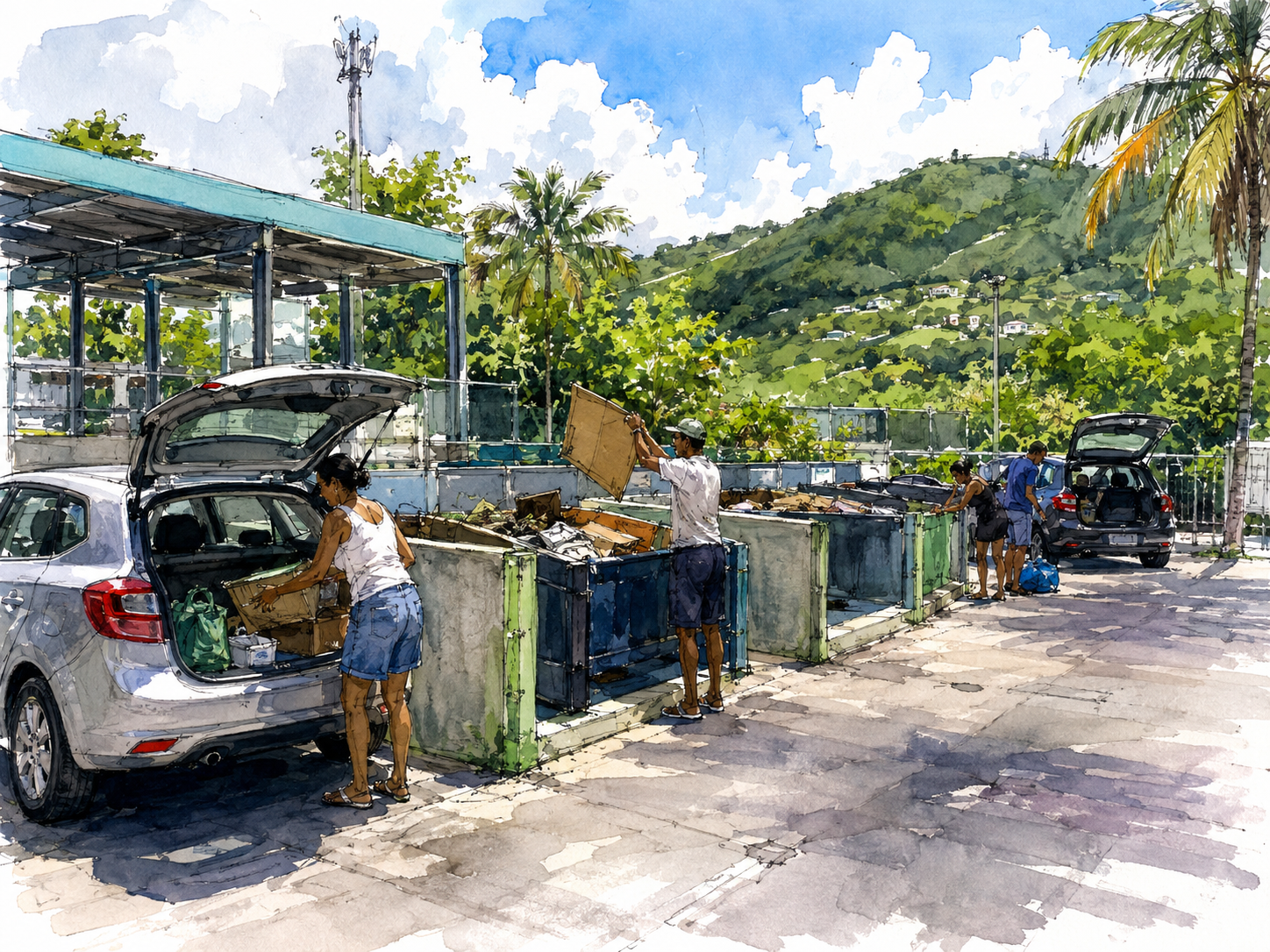
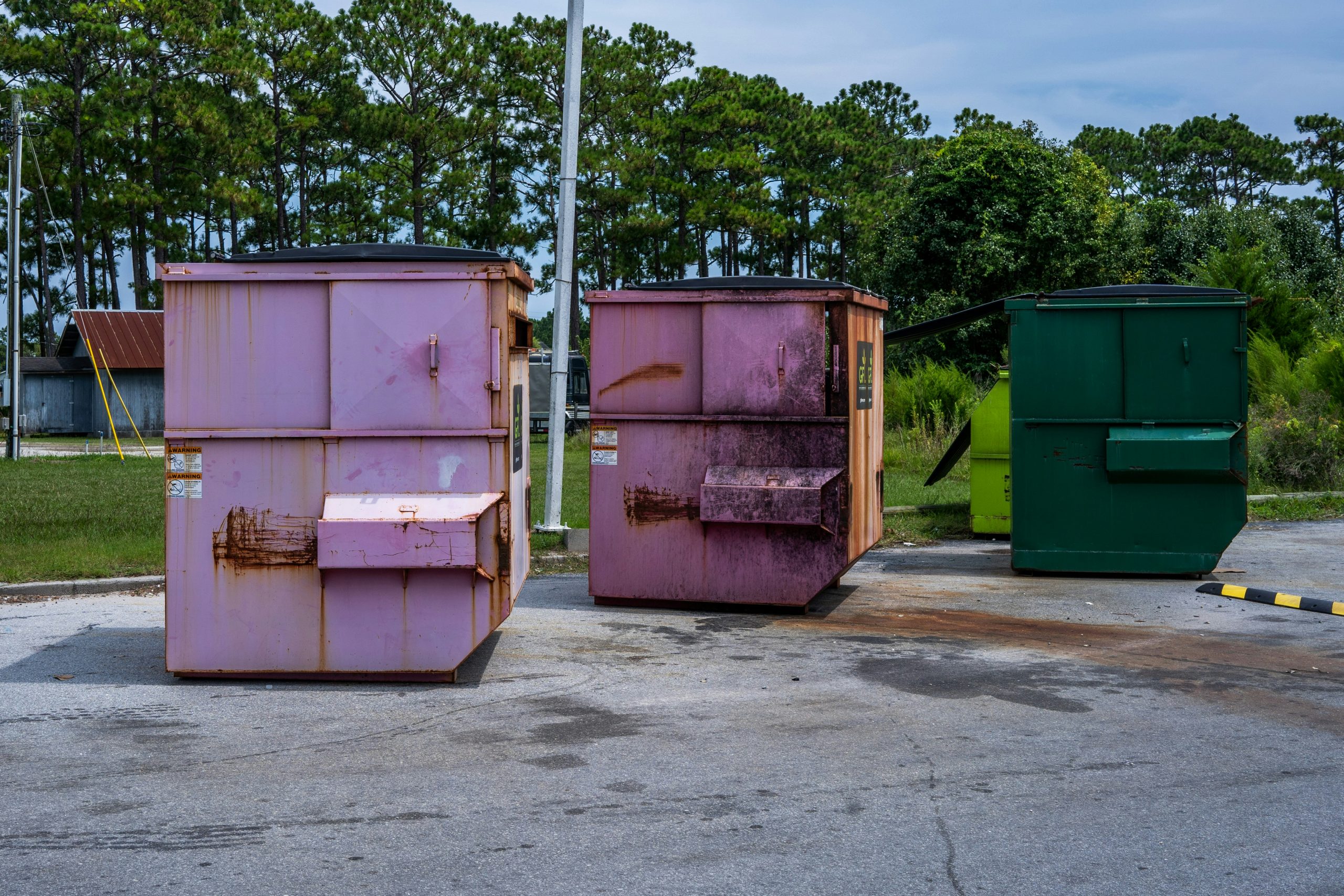
Developed over the years to respond to ship groundings, the sites used by municipalities were often selected in emergency situations, based on their proximity to the affected areas and the available land.
Some are currently overwhelmed or inadequately equipped, while Their long-term viability may also be hampered by land-use constraints.
This issue is all the more important given that, across the French West Indies, storage remains the primary use for the harvested seaweed: more than 95 % of collected volume are still being directed there, according to the assessment in the Sargasso Sea Plan II.
Once deposited, however, the Sargassum continues to decompose. This decomposition produces leachate—liquids rich in salts that may contain arsenic. Without appropriate collection and treatment systems, these runoff fluids can pose a risk to the surrounding soil and water.
ADEME thus emphasizes the need to continue pilot projects in order to develop systems capable of collecting these effluents and ensuring that discharges comply with environmental requirements.
In Le Robert, a pilot site to test a different approach
Part of the answer might come from the Reynoird neighborhood, in Le Robert, where a pilot storage site is being prepared.
Driven by the GIP Sargasses Martinique In collaboration with several partners, including CAP Nord, Cerema, DEAL, and ADEME, the project is intended, among other things, to test a sealed storage system as well as the collection and treatment of leachate.
The goal goes beyond simply creating a new storage facility. Eventually, these storage sites could evolve into full-fledged pretreatment platforms that incorporate processes such as desanding, drying, and compacting the algae.
These operations are also important for another long-standing goal: to put Sargassum to good use rather than letting it decompose at storage sites.
The development remains in the planning stage
Compost, biofertilizers, biofuels, biomaterials, and bioplastics: for the past fifteen years or so, there has been no shortage of avenues to explore. Yet, No industrial recycling sector is yet truly operational in Martinique.
In Le François, Holdex Environment has been working for several years on incorporating Sargassum into its organic waste treatment process.
According to the company, its facility could accommodate up to 25,000 metric tons per year. However, the transition to actual use continues to be hampered by requirements related to material quality and contaminant control.
Arsenic is one of the main areas of concern. Added to this are the high water content of the algae, their salinity, the possible presence of sand and debris during collection, and the significant variation in available volumes from one period to another.
These constraints partly explain why many projects remain in the experimental stage. During periods of heavy Sargassum strandings, ADEME may receive as many as one new project proposer per week, according to its Sargassum expert Charlotte Gully.
However, few manage to simultaneously navigate the technical, regulatory, and financial hurdles required for industrial-scale production.
Managing Sargassum is therefore no longer limited to its rapid removal from beaches. The next challenge is to organize the entire process following collection—from secure storage to pretreatment—and then to ensure its recycling in a way that meets environmental and health standards.
Source: SPECIAL REPORT on Sargassum by RCI Web with Solveig Le Gat, published on August 3 and 6