
Speech by NM – AN: Proposed Resolution to Ensure Continuous Access to Drinking Water in Overseas Territories Reducing water loss, securing infrastructure, and better preparing for droughts: sustainable access to water is crucial to Martinique’s future. Naïma Moutchou’s October 8 speech sheds light on several choices facing the overseas territories, ranging from network upgrades and new technologies to service organization.
Water supply planning spans decades. Pipelines, treatment facilities, and storage capacity must meet daily needs while withstanding future climate conditions. For Martinique, projections presented by Météo-France in March 2026 indicate more severe dry spells by 2100, based on the warming scenario used to plan for adaptation. These projections reveal an increased risk of drought, with potential consequences for water resources, ecosystems, and agriculture.
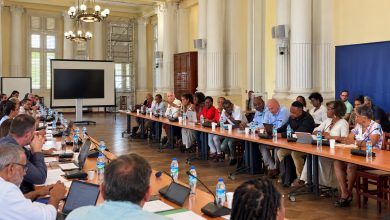
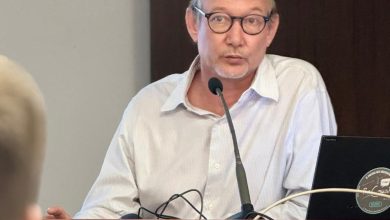
It is in this context that Naïma Moutchou’s speech on continuous access to drinking water in the overseas territories should be viewed. The text, dated October 8, acknowledges the shortcomings of the service and emphasizes the need to see the projects already underway through to completion. It accompanied the consideration of a proposed resolution that was ultimately rejected by the National Assembly.
Water conservation starts with the water systems
In her speech, the Minister for Overseas Territories noted that droughts, hurricanes, and heavy rains can compromise infrastructure or degrade water quality. These hazards compound long-standing challenges:
«We are also paying the price for years—sometimes decades—of underinvestment and lack of maintenance.»
"When the equipment is too worn out," explains Naïma Moutchou, "repairing leaks on a case-by-case basis must give way to more extensive repairs.".
For Martinique, reducing water losses is therefore as much a matter of conserving water resources as it is of ensuring service quality. Delivering more of the water that has already been abstracted and treated to consumers allows for better use of existing capacity. Network maintenance, renewal, and leak detection therefore play a key role in the region’s adaptation efforts.
However, this work must actually be carried out. The speech emphasizes the need for engineers, technicians, and companies capable of planning projects and managing construction sites. Ensuring a reliable water supply therefore also depends on the availability of skilled workers and the ability to maintain the facilities once they are operational.
Solutions to be evaluated over their entire lifecycle
Desalination, rainwater harvesting, water reuse, leak detection: Naïma Moutchou discusses several approaches, with different applications depending on the region. In Mayotte, she cites the «One Tank, One Home» project, designed to expand rainwater harvesting and storage. In Réunion, she mentions the efforts underway to roll out smart meters across the board to improve network management.
The minister outlines the criteria that should guide these decisions:
«We need to assess their technological maturity, cost, energy consumption, environmental impact, and, of course, health and safety guarantees.»
This analytical framework is of direct relevance to Martinique. It calls for examining operating and maintenance expenses just as carefully as construction costs. A solution must be sustainable, have the necessary expertise for its maintenance, and provide water suitable for its intended uses. The expected benefits in terms of water supply must also be evaluated in light of energy consumption and environmental impacts.
An organization focused on results
Governance is the other aspect of this issue. In her speech, Naïma Moutchou cites the law of June 30, 2026, which authorizes the Assembly of Martinique to establish and implement a single water and sanitation authority. This authorization opens up the possibility of organization on a territorial scale.
The minister sees this as a way to streamline governance and improve service efficiency. The value of such an organizational structure will be measured by its ability to plan investments, coordinate projects, and ensure long-term maintenance. For residents, the expected results remain tangible: a more consistent water supply, controlled quality, and a service better equipped to weather difficult times.
«The longer the difficulties have persisted, the more rigorous we must be in our execution.»
This sentence from the speech provides a benchmark for tracking public commitments. Preparing for the water needs of tomorrow means highlighting—starting today—the work that has been done, the losses that have been prevented, and the improvements achieved at the tap.
Philippe Pied
Download the full text of Naïma Moutchou's speech as a PDF HERE: