On October 8, the Intergovernmental Panel on Climate Change (IPCC) released a landmark scientific report highlighting the need for urgent action to limit global warming to 1.5°C. The report aims to serve as a roadmap for countries to limit the effects of climate change.
The coming years will undoubtedly be the most important in human history, for we face a colossal challenge: that of radically and rapidly changing the way our societies function, or else risk seeing the world as we know it today disappear. For climate scientists who have been trying to alert policymakers for the past forty years or so, all the warning signs are now flashing red—but there is still time to act… After that, it will be too late, and climate change will spiral out of humanity’s control. The only solution is to transition to a completely carbon-free economy. According to the IPCC’s October 8 press release «The report states that limiting global warming to 1.5°C would require «rapid and far-reaching» transitions in land use, energy, industry, buildings, transportation, and urban planning. Global net anthropogenic carbon dioxide (CO2) emissions would need to be reduced by approximately 45 % from 2010 levels by 2030.»
Keeping global warming below 1.5 degrees is an absolute necessity…
Scientists have outlined two possible scenarios for the year 2100. In one scenario, the planet would warm by 1.5 degrees, causing sea levels to rise by 48 cm and affecting 46 million people. With a 2° rise, sea levels would rise by 56 cm, affecting 49 million people, and 18% insect species, 16% plant species, and 8% vertebrate species would become extinct.
This report was eagerly awaited by most NGOs and environmental advocacy groups. Calls to take action against climate change are being heard around the world. Politicians and business leaders are being called to account, and citizens are speaking out to alert decision-makers through a global climate march.
«It took 150 years for the climate to warm by 1 degree, and it will take only 50 years for it to warm by another degree. Climate change will accelerate three times as fast in the future.’. We are losing control of the Earth’s climate system and the global warming we have set in motion. This proves that it is essential to act now to ensure the stability of our world and our ability to live together in the future.
The IPCC report shows that if we do nothing, we will reach 1.5 degrees by 2040 and 2° of warming by 2075. The vast majority of the generations who will live through this century and experience a world that is 2° warmer have already been born. So this isn’t for future generations—it’s for us and for the children who are already here today. That’s why this is an urgent issue and not something to put off until later. That’s why WWF is calling for a Big Bang. We cannot settle for a policy of small steps that eventually produces results, but results that come too late and are insufficient. That is why we are calling on the President of the Republic and the Prime Minister to finally take action so that we can win this battle. The good news—as the IPCC report also points out—is that We have all the solutions, We know how to make clean cars; we know how to make electric scooters and bicycles; we know how to produce renewable energy and build net-zero homes—we know how to do it all. It’s just that today we aren’t organized to scale up our efforts and make this a priority. However, as the IPCC report also shows, there are far more jobs to be created in a decarbonized economy that combats climate change than jobs that are at risk of being lost. So there’s a clear environmental benefit, an increasingly tangible economic benefit, and a benefit in terms of security. So, we can clearly see all the benefits of climate action. Conversely, this summer we saw the trailer for a movie we don’t want to watch—one in which the climate is spiraling out of control and generating extreme weather events that we’ve all begun to experience firsthand. Our appeal is urgent; it is absolutely essential that all political leaders and business executives read this report—and that you read it as well—so that the climate issue becomes the top priority in our actions. »
The Role of the IPCC
The IPCC is the leading international body responsible for assessing scientific research on climate change, the consequences of such changes, the potential risks associated with them, and the measures that can be taken to address them.
This IPCC Special Report is the first in a series that will be published on specific topics through 2022, the date of the next climate change assessment. The development of the «Special Report on the Impacts of Global Warming of 1.5 °C» was requested at the 21st Conference of the Parties (COP21) in Paris. This report will be a central element of COP 24, which will take place this coming December in Poland and will provide an opportunity to take stock of the collective efforts made by the Parties to achieve the long-term goal set out in the Paris Agreement.
It has the merit of serving as a kind of roadmap for decision-makers around the world.
«This report provides policymakers and professionals with the information they need to make decisions regarding climate change while taking into account local conditions and the needs of communities.» Debra Roberts, Co-Chair of Working Group II. It was prepared by 91 authors from 44 different countries and 133 scientific contributors.
The Urgency of the Energy Transition Across All Regions
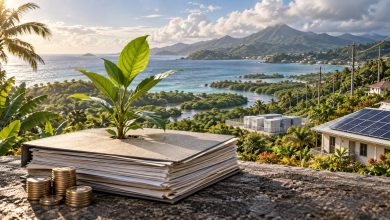
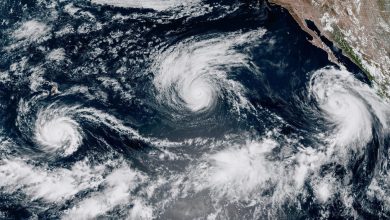
The people of Martinique do not seem to feel the urgency to act, even though climate change and its devastating consequences are far more visible in island regions (hurricanes, algal blooms).But instead of awareness campaigns on climate change and ways to combat it, advertisements on 4x4 billboards push consumers toward ever-greater consumption—particularly of high-displacement vehicles. Energy transition projects have even been the subject of controversy, with choices of initiatives—such as NEMO and ALBIOMA—deemed harmful to the environment. In this context, it is hard to believe that policymakers have truly grasped the urgency of the climate crisis.
However, in recent years, numerous initiatives offering alternatives to ever-increasing growth have emerged, and groups of citizens concerned about the climate crisis are mobilizing on social media. In fact, for the first time, Martinique will join the global climate march on Saturday, October 13, in the streets of Fort-de-France. It’s not too late to take action!
Nathalie Laulé

The WWF's Mission
Halt global environmental degradation and build a future in which human beings can live in harmony with nature.
And to learn more about the IPCC report: Summary for Policymakers of the Special Report on Global Warming of 1.5 °C, available at http://www.ipcc.ch/report/sr15/