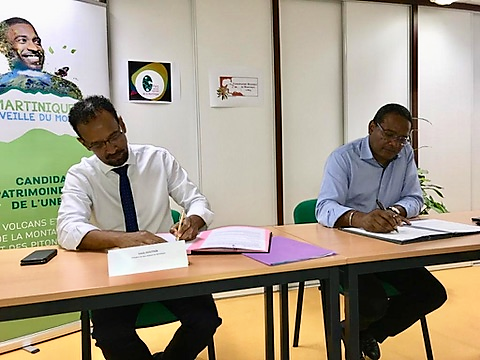
Friday, March 1, 2019, Louis BOUTRIN, President of the Martinique Nature Park (PNM) and Didier LAGUERRE, President of the Martinique Botanical Conservatory (CBMQ), signed an agreement that will enable a a better understanding and conservation of Martinique's biodiversity.

Since 1976, the PNM has been dedicated to protecting nature and Martinica’s cultural heritage. Since 2010, the CBMQ has been responsible for the scientific monitoring of wild flora and natural habitats, as well as the conservation of rare and endangered species in the region. They decided to pool their expertise to work together to raise awareness, preserve, and promote this threatened plant biodiversity… because the situation is serious.
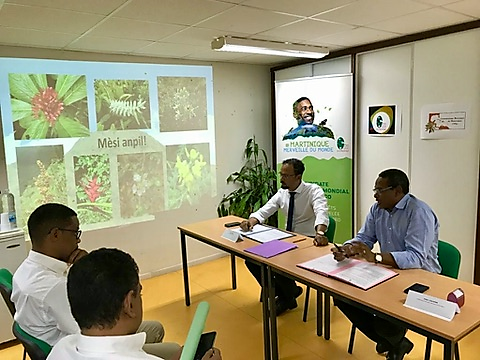
Located in one of the world’s 35 biodiversity hotspots and having lost more than 70 % of its primary vegetation, Martinique is a priority conservation area for biodiversity at both the local and international levels. 166 species have been assessed on our territory by the International Union for Conservation of Nature (IUCN), and the findings are clear: 117 species are threatened, including 14 strictly endemic species and 3 considered extinct. This convention was therefore essential for the preservation of our biodiversity, given the natural and human threats to which this island territory is subject.
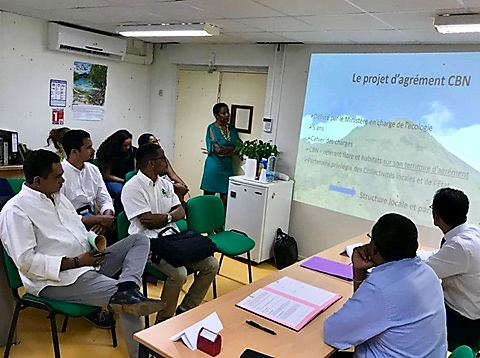
Many initiatives led by the PNM will also benefit from this partnership, such as the OSAIN project—which involves creating a reference herbarium of local medicinal plants— MYCONOVA, aimed at improving knowledge of Martinique’s «mushroom» resources; and the Martinique Biodiversity Observatory (OMB), which carries out actions to protect against invasive species.
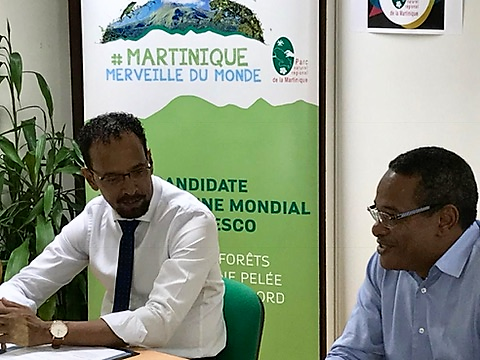
As Louis Boutrin pointed out, the signing of this agreement represents an ambitious and coordinated effort to protect Martinique’s biodiversity; it will be an asset in securing accreditation as a National Botanical Conservatory (CBN) as well as in Martinique’s bid for UNESCO World Heritage status.
On the PNR website