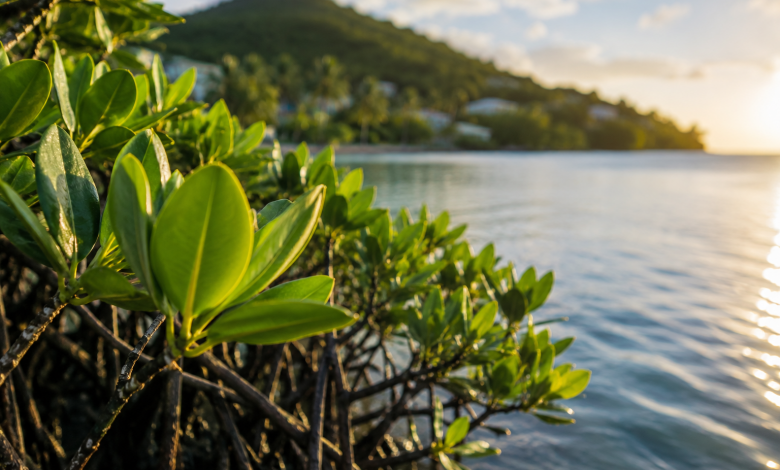
Martinique aims to accelerate its ecological transition. In April 2026, the Territorial Collectivity of Martinique and the French government officially signed the territory’s ecological planning roadmap. Behind this 90-page document lies a clear ambition: Develop a strategy for Martinique that can address the climate, energy, environmental, and social challenges of the coming years.
The result of efforts underway since 2023 as part of the Regional COP, this roadmap brings together 229 actions and 74 priorities identified for the 2030 timeframe. It is based on a broad consultation process that brought together local governments, state agencies, businesses, organizations, academics, and citizens.
But beyond the institutional framework, the document above all provides a clear-eyed assessment of the region’s structural weaknesses.
An island facing multiple vulnerabilities
The assessment presented in the roadmap highlights Martinique’s heavy dependence on external sources. The island currently imports more than 90 % of its energy resources, and more than 75 % of the electricity it consumes still comes from imported fossil fuels.
This energy dependence compounds other structural challenges: an unreliable water supply, the gradual saturation of waste treatment infrastructure, pressure on land, coastal vulnerability, and high exposure to climate change.
The document also notes that Martinique remains heavily dependent on private cars. In 2021, 75 % of trips were made by car, compared with only 9 % by public transportation. The stated goal is now to reduce this share to 50 % by 2030.
On the issue of water, the figures also highlight the scale of the challenges. The efficiency of drinking water systems was only 53 % in 2021, while the target set is 80 % by 2027. Against a backdrop of more frequent droughts and rising temperatures, this issue is becoming central to the region’s resilience.
Exceptional biodiversity under pressure
The roadmap also highlights the unique nature of Martinique’s natural heritage. Martinique is one of the world’s biodiversity “hotspots,” with more than 1,500 endemic species, nearly half of its land area covered by forest, and a marine area of 45,000 km².
But this ecological richness faces several threats: sprawl, land development, destruction of natural habitats, invasive alien species, and problems with the sewage system.
Climate change exacerbates these vulnerabilities. The document identifies, in particular:
- rising sea levels,
- the increase in extreme weather events,
- coastal erosion,
- droughts,
- and massive Sargassum strandings.
In fact, the issue of adaptation has reemerged as one of the key themes of the regional strategy.
229 actions to transform several sectors
To address these challenges, the roadmap is organized around several key areas: improving production, better conservation, better transportation, better nutrition, and adapting the region to the effects of climate change.
Some initiatives directly address everyday challenges:
- promotion of carpooling,
- improvements to public transportation,
- renovation of water systems,
- establishment of recycling centers,
- development of renewable energy,
- combating invasive alien species,
- coastal adaptation in response to coastal erosion,
- or measures designed to limit the impacts of Sargassum.
The document also outlines initiatives focused on training, raising awareness, and providing support to economic stakeholders in order to bring about changes in practices across several sectors.
The estimated total cost of the measures is approximately 320 million euros.
An ecological transition designed at the regional level
The roadmap highlights another key issue: the need to better coordinate existing public policies.
Several initiatives are already in place in Martinique, particularly in the areas of energy, waste, the circular economy, and water. The challenge now is to coordinate these strategies and strengthen their long-term management.
The document also highlights the need to further develop regional data, facilitate access to financing, and strengthen regional cooperation in the Caribbean.
Another notable point: citizen participation plays a significant role in the process. A public consultation held between August and October 2025 drew 940 participants. The topics that generated the strongest consensus were sustainable food, climate, and biodiversity.
The challenge now is to turn the strategy into concrete results
The signing of this roadmap marks a new step in the regional implementation of ecological planning in Martinique. However, the document itself acknowledges that several initiatives still require funding, clearly identified project leaders, or enhanced monitoring tools.
The real challenge, therefore, will lie in the region’s ability to translate this strategy into concrete results in the coming years.
Faced with structural dependencies, climate vulnerability, and the need to conserve resources, Martinique is now seeking to chart an ecological course tailored to its island realities.
Click here the roadmap