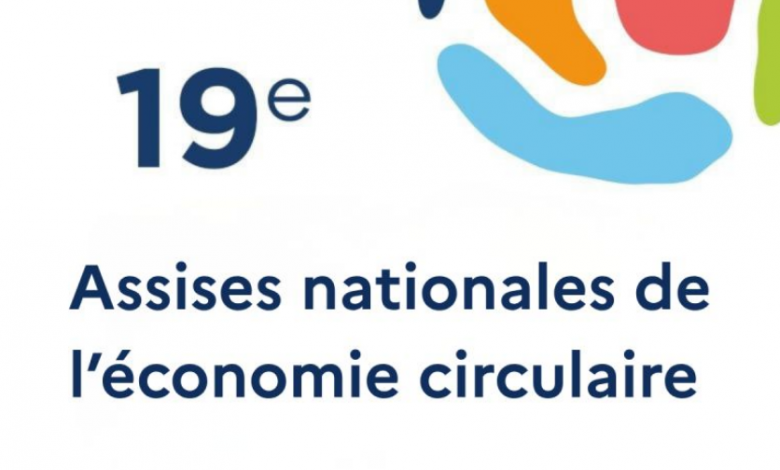
The former National Waste Conference is now the National Circular Economy Conference. Local governments, businesses, and institutions are invited to attend on September 30 and October 1, 2026, at the Cité des Congrès in Nantes for two days dedicated to transforming production, consumption, and resource management practices.
A name change that reflects the broader scope of the issues at stake
The event will no longer be limited to waste collection, sorting, or processing. Its program now encompasses the entire product life cycle: eco-design, sustainability, repair, reuse, material selection, industrial models, and public procurement.
The first plenary session will focus in particular on Circular Economy Act and at the Clean Industrial Deal, along with a discussion of their implications for the industry sectors. This trend reflects a commitment to preventing waste by taking action as early as the product design stage, rather than focusing efforts solely on the end of a product’s life cycle.
Six courses on the program
Unlike the introductory text, which mentions five, the official program behaves well six courses :
- produce more efficiently; ;
- consume more wisely; ;
- better anticipate the future; ;
- provide better support to local communities; ;
- manage waste more effectively on a daily basis; ;
- better implement reuse.
In total, 36 themed events are scheduled, including six main sessions and thirty workshops. Discussions will focus in particular on reform of the construction sector, plastics by 2040, repair, the textile sector, PFAS, contaminated land, biowaste, recycling centers, and environmental taxation.
Themes that reflect the realities of life in Martinique
No session is explicitly devoted to Martinique or the overseas territories. However, several topics may be of particular interest to stakeholders in Martinique.
The workshop on imports, exports, and sovereignty addresses the concerns of island territories regarding their dependence on external trade flows. In this context, repairing, reusing, and extending the lifespan of products can help reduce the need for new equipment.
Biowaste and the return of organic matter to the soil are also important issues. They raise the question of local resource recovery and reducing the volume of waste sent to treatment facilities.
The program also addresses construction waste, illegal practices, waste prevention, recycling centers, and urban cleanliness—all topics related to the day-to-day operations of local governments.
Reuse Takes Center Stage
Reuse now has its own track, with six workshops focused on product reusability, business models, corporate procurement, the role of consumers, and regional dynamics.
The final plenary session will also feature An overview and outlook on reuse and repurposing in France. This central role demonstrates that reuse is now viewed as an economic activity that needs to be structured, rather than merely as an experimental or community-based practice.
Regions Called Upon to Take Action
A comprehensive session will be devoted to local policies, featuring discussions on sustainability plans, prevention, land-use planning, taxation, and adaptation to climate change. The second day will also begin with a plenary session focused on local initiatives related to the new terms of office.
By broadening its scope to include production, consumption, and reuse, the 2026 edition aims to go beyond mere waste management. This event is likely to be of interest to stakeholders in Martinique who are committed to waste prevention and the development of more localized waste management systems.