
In April 2026, the DEAL Martinique issued a new alert regarding the monitoring of diadem sea urchins. A mortality event had struck the island in 2025. Behind this low-key warning lies a very real threat. It affects both the health of coral reefs and the food security from all over the island.
A herbivore essential to the balance of coral reefs
The diadem sea urchin (Antillean Diadem) measures just a few centimeters. Yet it plays a vital role in the ecosystem. Its long black spines can reach thirty centimeters in length. It is one of the most important herbivores in the Caribbean coral reefs.
By feeding on algae, it limits their proliferation. In addition, it promotes coral growth. This echinoderm acts as a true reef gardener. Without it, vegetation would quickly overrun the seafloor.
Its presence directly contributes to the health of the reefs. It also strengthens their resilience to stress. When its populations decline sharply, algae quickly colonize the seafloor. As a result, the entire coral ecosystem is disrupted.
For the people of Martinique, this imbalance is not just a matter of biodiversity. In fact, it directly impacts coastal fishing. It also affects the livelihoods of coastal communities and their daily food supply.
Two mortality crises in four years
2022: A First Major Setback
The alarm bells began to ring in early 2022. Martinique was then hit by a wave of mass deaths. Many islands in the Caribbean were facing the same situation.
Infected sea urchins quickly lose their spines. They die within a few days. Sometimes, sea urchins disappear entirely from certain sites. The disease spreads rapidly throughout an affected area.
Since 2023, scientific understanding of this topic has advanced. International research has identified the causative agent. It is a ciliated protozoan belonging to the Scuticociliata group. It is closely related to the species Philaster apodigitiformis. This microscopic parasite infects the tissues of sea urchins. It causes them to rapidly lose their spines. This is a sure sign that death is imminent.
2025: A Worrying Recurrence
Unfortunately, Martinique’s reefs are still suffering. In 2025, another wave of coral mortality struck certain areas. This time, the scale was smaller than in 2022. Nevertheless, it serves as a reminder of a troubling reality.
Sea urchin populations, even those that have partially recovered, remain vulnerable. That is why the DEAL Martinique is maintaining enhanced monitoring. It calls on all stakeholders in the marine environment to remain vigilant.
This 2025 episode does not occur in isolation. It compounds other threats to the reefs. Coral Tissue Loss Disease (CTLD) is also taking its toll. Bleaching caused by high water temperatures persists. In Martinique, successive bleaching events have already destroyed a significant portion of the coral cover.
As a result, the ecosystem absorbs one shock after another without having time to recover.
An issue that goes beyond mere environmental concerns
Reefs That Are Essential to the Local Economy
Reef degradation has tangible economic consequences. Coral reefs play a crucial role in fish stocks. Artisanal fishing in Martinique depends directly on them.
These habitats serve as nurseries for many commercially important species, including snappers, groupers, and spiny lobsters. In addition, they protect the coastline from erosion. They also contribute to the island’s appeal as a tourist destination.
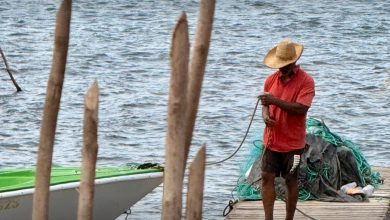
For coastal fishermen, the health of the reefs directly affects their income. This is particularly true in the towns of Le Marin, Sainte-Anne, and Le Robert. Prolonged degradation reduces catches. It affects the nutritional quality of local food supplies. It also puts the households most dependent on the sea at risk.
That is why the DEAL Martinique emphasizes the urgency of this monitoring. Reef health is also a public health issue.
A Monitoring Network for Action
In light of this alarming situation, DEAL Martinique coordinates an active monitoring network. It brings together scientists, volunteer divers, and marine professionals. Together, they form a valuable monitoring network.
Anyone who observes diadem sea urchins showing signs of distress should report the sighting. These signs include damaged or sparse spines. The relevant authorities should be contacted. These field reports make it possible to quickly map the spread of a potential epidemic.
By reporting your observations, you are helping to protect the reefs as a community. The diadem sea urchin census is underway and every piece of data counts.
Protect the sea urchin to protect the island
Ultimately, collective action remains the best short-term solution. Martinique’s reefs are under multiple and simultaneous pressures. Rising water temperatures pose a threat. The land-based pollution persist. Emerging diseases are on the rise.
In this context, every piece of data really counts. Martinique's biodiversity is under threat on several fronts. Protecting the crowned sea urchin also means protecting our shared natural and culinary heritage. Future generations have the right to inherit intact reefs.