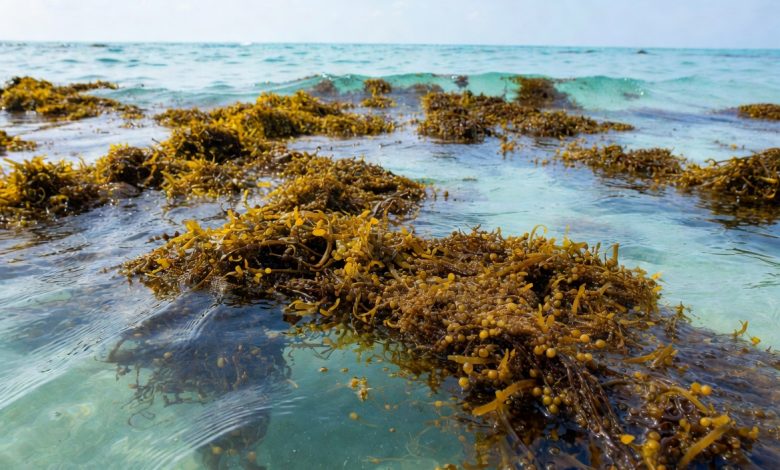
Sargassum is a major problem for the Caribbean in general and for Martinique in particular. In light of this, government authorities are taking action to try to find concrete solutions. In the meantime, the Sargassum is being collected and removed, but this process entails significant costs for the local government and businesses in the region.
Combating Sargassum
In its report on sargassum collection, the Martinique Prefecture announced that 492.9 metric tons were collected during the week of May 11–15, 2026, and 449.8 metric tons during the week of May 18–21, 2026, for a total of 4,966.75 metric tons since the beginning of 2026. «The government and the GIP Sargasses continue to work alongside local municipalities to relentlessly combat the massive influx of sargassum in Martinique,» stated the Prefecture of Martinique. In 2025, 4,966.75 metric tons had been collected.
What is the economic cost of Sargassum to the Caribbean?
The Caribbean has been facing the major problem of Sargassum strandings since 2011, and 2025 was marked by a sharp increase in the phenomenon, «suggesting that it will persist and become less seasonal in the coming years,» notes CEROM in a study published in collaboration with IEDOM, INSEE, and AFD.
There are various collection strategies: onshore collection or offshore collection. For example, in 2025, 45,000 m³ were collected offshore in Martinique, and 152,000 m³ were collected onshore in Guadeloupe. Faced with the scale of the problem, public authorities have taken action: for example, the Sargassum II plan has a budget of 36 million euros, and the GIP’s budget is 1.7 million euros in 2025.
What are the challenges involved in combating Sargassum?
There are many challenges facing the Caribbean islands:
- Health and Environmental Issues: 700 patients were examined for health problems related to Sargassum
- Economic challenges, meaning financial losses for fishermen and restaurant owners
- Challenges related to population attractiveness: including a potential loss of 1,52% residents along the Atlantic coast
To address this issue and prevent excessive negative impacts on residents and the environment, two programs have been launched to promote cooperation among regional stakeholders: the SARSEA project and Sarg’coop.
Other options are currently being explored in an effort to find sustainable solutions for recycling sargassum, such as composting, bioethanol, biogas, biostimulants, and cosmetics. If sargassum could become a new resource, its removal would be easier.