On March 4, 2025, the judge presiding over summary proceedings at the Martinique Administrative Court issued an emergency order suspending an Ifremer seismic survey campaign in the Agoa Marine Sanctuary. This unprecedented decision, at the intersection of environmental law and species protection, forced the scientific operator to cancel the entire mission.
The Agoa Sanctuary, a Protected Area Under Severe Pressure
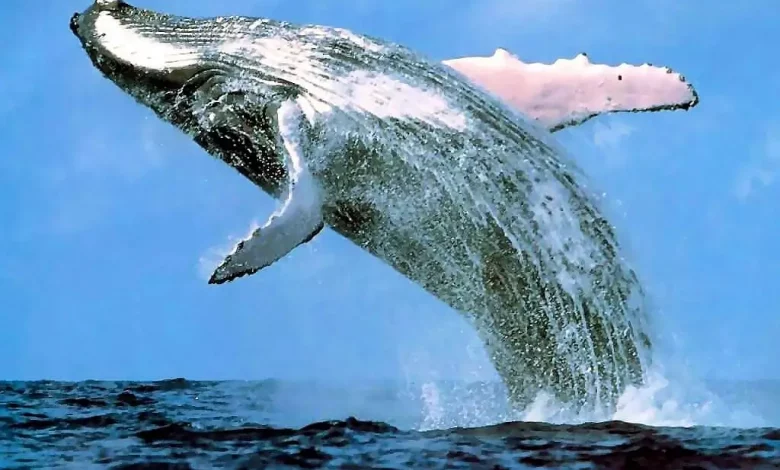
Off the coast of the islands of Saint Martin, Saint Barthélemy, Guadeloupe, and Martinique lies the Agoa Sanctuary, one of the richest and most vulnerable marine protected areas in the French West Indies. Every year between March and April, two iconic species classified as «endangered» by the International Union for Conservation of Nature—the humpback whale and the sperm whale—gather there in large numbers to breed and give birth.
It was precisely in this area, and during this period, that the French Oceanographic Fleet (FOF), operated by the French Research Institute for Exploitation of the Sea (Ifremer), had planned to deploy the oceanographic vessel L'Atalante for a marine geophysics mission. Led by the University of the Antilles and the CNRS, this expedition aimed to better understand the tectonic behavior of the Antilles subduction zone and was scheduled to take place from March 15 to April 11. The Martinique Prefecture had issued the authorization order on January 13, 2025.
Active Community Organizations, a Responsive Justice System
In late February 2025, several wildlife conservation organizations in the Caribbean issued a joint statement to warn of the dangers of this campaign. They condemned methods involving the use of air guns and sonar to survey the seabed, methods they deemed incompatible with the presence of cetaceans. An online petition had gathered more than 3,400 signatures. These organizations had also filed an urgent petition with the administrative court.
The judge presiding over the preliminary injunction hearing issued her ruling on March 4, 2025, just a few days before the mission was scheduled to begin. She noted that the dates of the scientific expedition, scheduled for March and April, coincide with the peak season for these two protected species, when they migrate to breed and give birth.
A legal argument based on irreversible risk
In substance, the judge cited two grounds. First, the acoustic equipment used to generate seismic profiles covers the low frequencies at which marine mammals communicate and exceeds known impact thresholds. This equipment is likely to cause disruptions in the mother-offspring bond among cetaceans, as well as potentially lethal damage to the auditory system and other organs.
Furthermore—and this is the major legal contribution of this order—the judge linked the environmental risk to a fundamental freedom: the seismic survey campaign constituted a serious and manifestly unlawful infringement on everyone’s fundamental right to live in a balanced and environmentally sound environment. In doing so, she applied the Environmental Charter—which has constitutional status under French law—to justify an emergency suspension.
Consequently, the maritime prefect’s order authorizing the campaign has been suspended.
Ifremer Cancels, Science Waits
In response to this decision, the French Oceanographic Fleet opted for cancellation rather than legal action. Any appeals that might have been filed could not have been processed within the timeframe set for the expedition. The suspension effectively amounts to cancellation.
Ifremer expressed its confusion. The operator believed it had taken unprecedented precautions: the use of a so-called «high-resolution» seismic source emitting acoustic power one hundred times lower than conventional standards, the establishment of an exclusion zone around the vessel, and the presence of five independent observers on board tasked with monitoring the approach of any cetacean or sea turtle. These measures had been discussed in advance with the Agoa Sanctuary itself. They were not enough to convince the judge.
The campaign has been rescheduled for a later date, outside the migration and breeding season.
An unprecedented decision, a lesson for scientific research
According to the French Oceanographic Fleet, this order is the first of its kind in France. It sets an important precedent: a prefectural authorization for a scientific expedition in a marine protected area may be suspended through summary proceedings if the risk to protected species is deemed serious and irreversible, even if the operator has implemented mitigation measures.
For Martinique and the French West Indies, this decision confirms the active role of the Fort-de-France Administrative Court in protecting the marine environment. It also highlights the tension—now legally resolved—between the need for scientific research—in this case, the assessment of seismic risk in a particularly vulnerable region—and the protection of marine ecosystems.
Philippe PIED