In 2025, L’Espérance Auteuil Martinique took another step forward in the recycling of its organic waste with the launch of a mechanical composter at the Jaden Lesperans job-training workshop. The project combines the circular economy with skills development for employees in the job-training program.
A compost bin for recycling food waste
Crop residues, followed by food scraps: Some of the organic waste produced at the L’Espérance Auteuil Martinique site is now being repurposed.
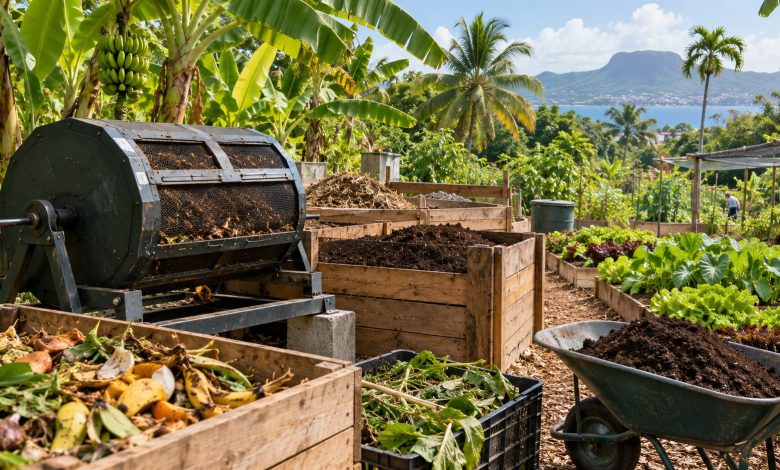
In 2025, the organization launched a platform for processing and recycling biowaste at the job-training workshop Jaden Lesperans. The purchase of a mechanical composter, supported by the Albioma Foundation, makes it possible, in particular, to process waste from the school cafeteria and the site’s agricultural activities.
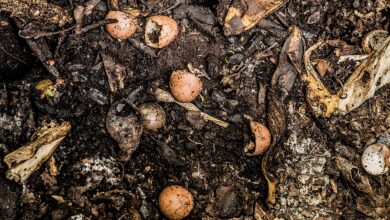
The initial trials focused first on crop residues before incorporating food scraps. The resulting compost can then be returned to the workshop’s production processes, thereby creating a local cycle for the reuse of organic matter.
The Circular Economy as a Tool for Social Inclusion
Another unique aspect of the project is its social dimension. The composter is not only used as a waste-treatment device; it also becomes a training tool for employees in job placement programs.
The teams were briefed on how the facility operates, how to monitor the decomposition of materials, and the various uses of the compost produced. The Foundation thus presents the equipment as an educational tool for teaching about the circular economy.
The initiative thus brings together two key issues: reduce the amount of organic materials classified as waste and develop professional skills through their processing.
25 employees have already been trained
The initial results provide a measure of how the initiative is getting off the ground. According to the Albioma Foundation’s 2025 Activity Report:
- 25 employees have been trained in how to use the composter;
- about 10 kg of food scraps are valued on average each week;
- more than 2 m³ of compost were produced.
These volumes are still on the scale of a work-integration project. Nevertheless, they demonstrate in concrete terms how a stream of biowaste can be reintroduced into agricultural activity rather than simply disposed of.
Funding of 61,035 euros over two years
The project led by L’Espérance Auteuil Martinique through its job-training workshops Jaden Lesperans and Recyk Bwa, is supported by 61,035 euros over two years from the Albioma Foundation.
The report also notes that 26,035 euros paid out in Martinique in 2025 for projects related to workforce integration.
Established in 2023, the Foundation focuses its overseas efforts on two areas: biodiversity conservation and workforce integration.
A solution that addresses the challenges facing Martinique
The recycling of organic waste is a widely recognized issue in Martinique. In particular, ADEME allocates specific resources to bio-waste in the region and, in 2025, published the results of a new study characterizing household and similar waste in Martinique.
The Martinique Waste Prevention and Management Plan, adopted in 2019, also sets goals for reducing waste generation and improving waste recovery.
On its own scale, the experiment conducted by Jaden Lesperans illustrates this logic: to turn a material destined for disposal into a locally reusable resource, while using the transformation process as a vehicle for training and integration.