
Entre terre et mer, la qualité des eaux littorales est un enjeu majeur pour l’économie des territoires, pour la santé humaine et pour la biodiversité. Toutes les raisons sont bonnes pour préserver la qualité de la ressource, le gouvernement vient justement de rendre sa feuille de route.
Les eaux littorales françaises
La réalisation de la « Feuille de route pour l’amélioration de la qualité des eaux littorales » a été décidée lors d’une réunion interministérielle en mai 2025 et publiée début mai 2026. Ce document gouvernemental « s’inscrit dans la politique de restauration du bon état du milieu marin. Elle vise à prévenir les pollutions d’origine terrestre et à réduire leurs impacts sur le milieu marin, les activités économiques et la santé publique », précise le communiqué du ministère de la Transition énergétique.
La protection des eaux littorales est un enjeu majeur car la dégradation de la qualité de l’eau en général peut avoir de lourdes conséquences sur l’ensemble de la société. « Les eaux littorales font vivre des milliers de familles de pêcheurs, de conchyliculteurs ou encore de professionnels du tourisme. Nos littoraux sont donc une interface cruciale. Une interface où les activités humaines, même très éloignées du littoral, ont des conséquences directes sur la qualité de ces eaux, avec un impact écologique mais également économique. La qualité des eaux littorales est donc un défi majeur pour aujourd’hui et plus encore pour demain », explique Catherine Chabaud, ministre déléguée auprès de la ministre de la Transition écologique, de la Biodiversité et des Négociations internationales sur le climat et la nature, chargée de la Mer et de la Pêche.
Et d’ajouter : « Pour la première fois, les leviers d’action – assainissement, urbanisme, biodiversité – sont saisis simultanément, au service d’un objectif unique : améliorer nettement et durablement la qualité de nos eaux côtières ».
Et en Martinique ?
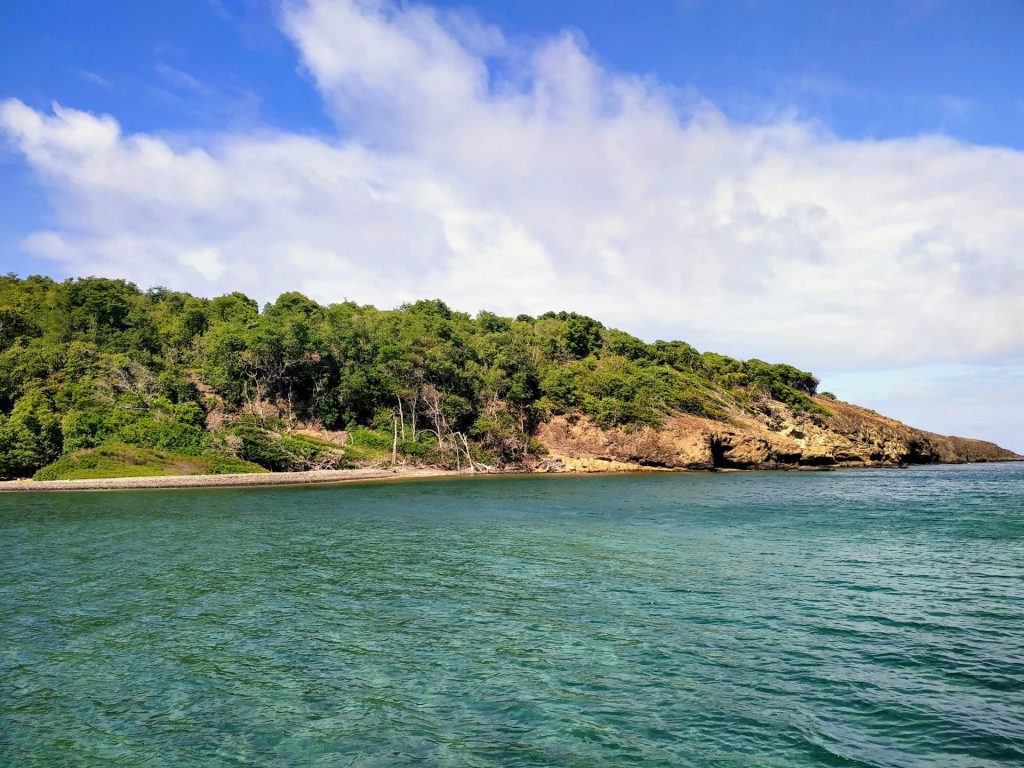
Si la feuille de route s’intéresse aux eaux nationales françaises en métropole, elle se concentre aussi sur les eaux littorales des départements et territoires d’outre-mer, via la mise en place de plan adaptés. « Depuis son lancement en 2016, le plan d’action interministériel Plan eau DOM (PEDOM) vise à améliorer durablement les services d’eau potable et d’assainissement dans les territoires d’outre-mer de la Guadeloupe, la Guyane, la Martinique, La Réunion, Mayotte et Saint-Martin, soumis à de fortes contraintes (climat, infrastructures, gouvernance) », souligne la feuille de route.
Améliorer la qualité des eaux littorales nécessite d’accentuer les échanges entre les acteurs de la terre et les acteurs maritimes, entériné par des formes contractuelles : « Les SAGE [schéma d’aménagement et de gestion des eaux] correspondent à la déclinaison des SDAGE [schéma directeur d’aménagement et de gestion des eaux] à une échelle plus locale (fleuve côtier, par exemple) et sont élaborés par les acteurs du territoire regroupés au sein de commissions locales de l’eau (CLE) ».
C’est notamment le cas en Martinique, où « d’autres formes contractuelles permettent également de réunir les acteurs et d’accompagner une dynamique territoriale comme l’illustre le contrat Littoral sud, qui s’étend sur le territoire de 12 communes de Martinique ».
La « Feuille de route pour l’amélioration de la qualité des eaux littorales » vise donc à dresser un constat de la situation des eaux littorales en France, avant de rappeler l’importance de les protéger, que ce soit grâce à des plans préétablis ou bien en rassemblant les acteurs du territoire.