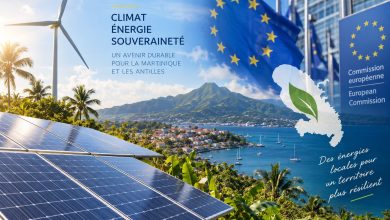

Martinique enjoys abundant sunshine, has biomass resources, is exploring its geothermal potential, and is seeking to further develop renewable energy. However, the island remains highly dependent on external sources to meet its energy needs.
According to the Roadmap for Ecological Planning Adopted in April 2026, 93 % A portion of the energy resources consumed in the territory is imported. This situation exposes Martinique to fluctuations in international markets and highlights how much work remains to be done to strengthen its energy independence.
A dependency rooted in the region’s energy history
Martinique’s insularity has shaped its energy model. For several decades, the territory has relied heavily on imported fossil fuels to generate its electricity.
Even today, more than 75 % of Martinique's electricity production relies on imported fossil fuels. This dependence has direct consequences. It makes the region vulnerable to fluctuations in global energy prices and increases the real cost of electricity generation.
The document also points out that the residential and commercial sectors account for the bulk of the island’s electricity consumption. Together, these sectors account for nearly 90 % of electricity consumption, far ahead of the industrial sector.
In this context, controlling energy consumption appears to be just as important a factor as developing new production capacity.
A More Complex Energy Transition on an Island
Generating more renewable electricity isn't just a matter of installing solar panels or wind turbines.
Unlike mainland territories, Martinique is not connected to any neighboring power grid. All electricity consumed must be generated locally, and the balance between generation and consumption must be maintained at all times.
This characteristic imposes significant technical constraints. When solar power generation decreases at dusk or during cloudy periods, the system must immediately have access to other energy sources capable of taking over.
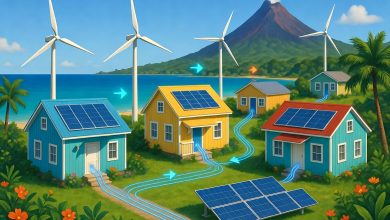
This reality explains why energy storage has become a major challenge in Martinique’s energy transition. The development of batteries and smart grid management solutions is now considered essential to support the growing use of renewable energy.
Renewable resources that remain largely underutilized
Despite these constraints, Martinique has several advantages that will enable it to gradually reduce its dependence on fossil fuels.
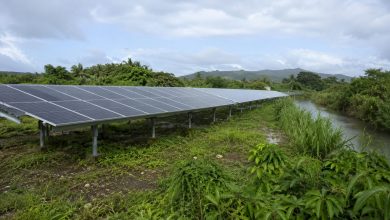
Solar energy is, of course, one of the key drivers identified. Favorable climatic conditions make it possible to anticipate a significant increase in photovoltaic production in the coming years.
The roadmap also mentions other approaches that have already been incorporated into the region’s energy planning:
- the development of wind power; ;
- energy recovery from waste; ;
- biomass; ;
- geothermal energy; ;
- expanding storage capacity; ;
- ensuring the security of the power grid.
The goal is not only to produce more renewable energy, but also to diversify energy sources in order to strengthen the energy system’s resilience in the face of external crises or climate-related events.
Energy Self-Sufficiency as a Strategic Goal
Today, the energy issue goes beyond mere environmental concerns.
For Martinique, reducing energy imports also means improving its economic resilience, strengthening its territorial sovereignty, and limiting its exposure to international shocks.
The Multi-Year Energy Plan (PPE), which provides the framework for the region's energy strategy, must therefore support the development of renewable energy sectors while ensuring grid stability.
This goal also involves training more professionals in the energy sector, facilitating the development of new projects, and securing the funding needed to transform the energy system.
A Long-Term Challenge
The ecological planning roadmap points out that energy self-sufficiency cannot be achieved overnight. There are still numerous technical, land-use, financial, and climate-related constraints.
But she also emphasizes that the current dependence is not inevitable. Through the development of renewable energy, improvements in energy efficiency, and grid modernization, Martinique now has a path forward to gradually reduce its energy vulnerability.
The challenge in the coming years will be to transform this potential into concrete achievements that can sustainably power the region while limiting its reliance on imported energy.