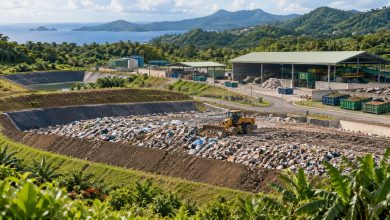
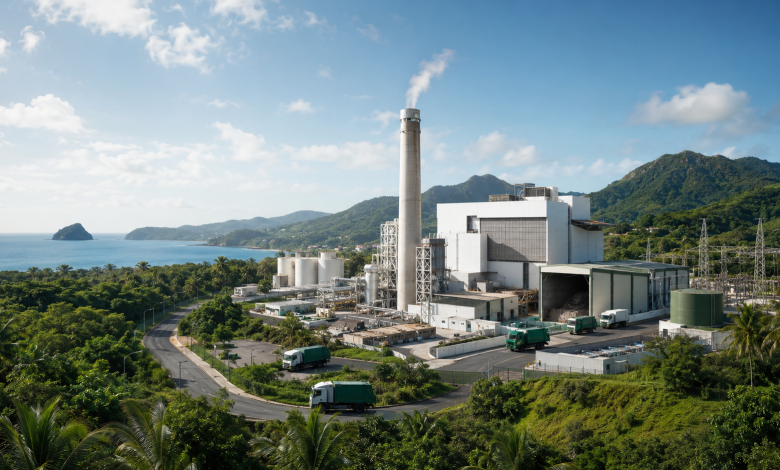
Once collected, sorted, and diverted from recycling streams, certain types of household waste can still be recovered. At the Morne Dillon Waste Treatment and Recovery Facility, burning this waste generates electricity. In a publication released on July 22, 2026, the SMTVD describes how this facility operates, which has a processing capacity of 115,000 metric tons per year.
A facility for handling waste that remains after sorting
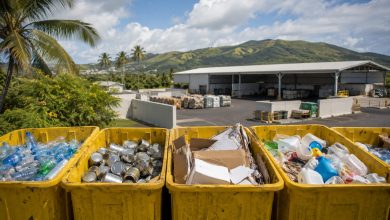
The’Waste Treatment and Recycling Facilitys, or UTVD, handles residual household waste. This is the portion that remains after prevention, sorting, and recycling efforts.
Energy recovery therefore takes place at the end of the chain. It does not replace waste reduction at the source, reuse, or material recycling. These solutions remain a priority, as the SMTVD also notes in its publication.
Waste that can no longer be sent to a material recovery stream is transported to the facility. It is then used as fuel to generate heat, and then electricity.
The SMTVD reports that the UTVD has an annual processing capacity of 115,000 metric tons. This figure refers to the facility’s capacity and should not be confused with the actual tonnage processed each year, which is not specified in the publication.
From Combustion to Electricity Generation
Upon arrival at the facility, the waste is received before being fed into the furnaces. Its combustion releases a large amount of heat.
This thermal energy is recovered in boilers to produce steam. The steam is then used to power an electricity-generation system. The facility is therefore not limited to waste treatment; it recovers some of the energy released during combustion.
The electricity generated is first used to meet the site’s operational needs. According to the SMTVD, The UTVD is therefore self-sufficient in terms of electricity. When production exceeds the facility's needs, the surplus is fed into the grid.
However, this self-sufficiency applies only to the site’s electricity needs. It does not mean that the entire waste collection, transportation, and treatment system in Martinique operates without an external energy supply.
The process also includes monitoring combustion, treating flue gases, and managing the resulting residues. These various aspects contribute to the assessment of an energy recovery facility’s environmental performance, beyond simply the amount of electricity generated.
An announced annual production of 40 GWh
The SMTVD reports that the facility produces each year 40 GWh of electricity, or 40 million kilowatt-hours.
According to the union, this output is equivalent to the annual electricity consumption of’approximately 20,000 households. This comparison provides an order of magnitude, even though the publication does not specify either the calculation method used or the exact amount of electricity fed into the grid after the site’s self-consumption.
It is therefore important to distinguish between the facility’s total energy production and the energy actually supplied to the grid. A portion of the 40 GWh is consumed directly to operate the UTVD.
Behind the operation of the equipment, 34 employees monitor the facilities on a daily basis. Their responsibilities include, in particular, process control, equipment monitoring, maintenance, and process safety.
The continuous operation of a facility of this size requires a wide range of technical skills and regular monitoring of the various stages of the process.
A complementary solution to reuse and recycling
Electricity generation offers a method for managing waste that can no longer be recycled. It allows for the recovery of some of the energy, but it does not turn incineration into recycling.
The priority remains to reduce the amount of waste generated, extend the lifespan of items, and better sort materials that can be reused or recycled. The more these systems advance, the more the amount of residual waste to be treated can be reduced.
Energy recovery is thus a key component of a broader system. Its value lies in its energy efficiency, compliance with environmental requirements, and its integration with waste prevention and management policies.
By converting some of the residual waste into electricity, The Morne Dillon UTVD contributes to local waste treatment and energy production in the region. However, this function remains secondary to a primary objective: to achieve a sustainable reduction in the volume of waste generated in Martinique.
Source: SMTVD Martinique