
Chlordecone contaminates many natural environments in Martinique, but how should we respond? How can we prevent excessively high concentrations of the substance? How can we safely consume seafood? These are just some of the questions that speakers will attempt to answer at the 2026 Fisheries Forum.
For Fishermen
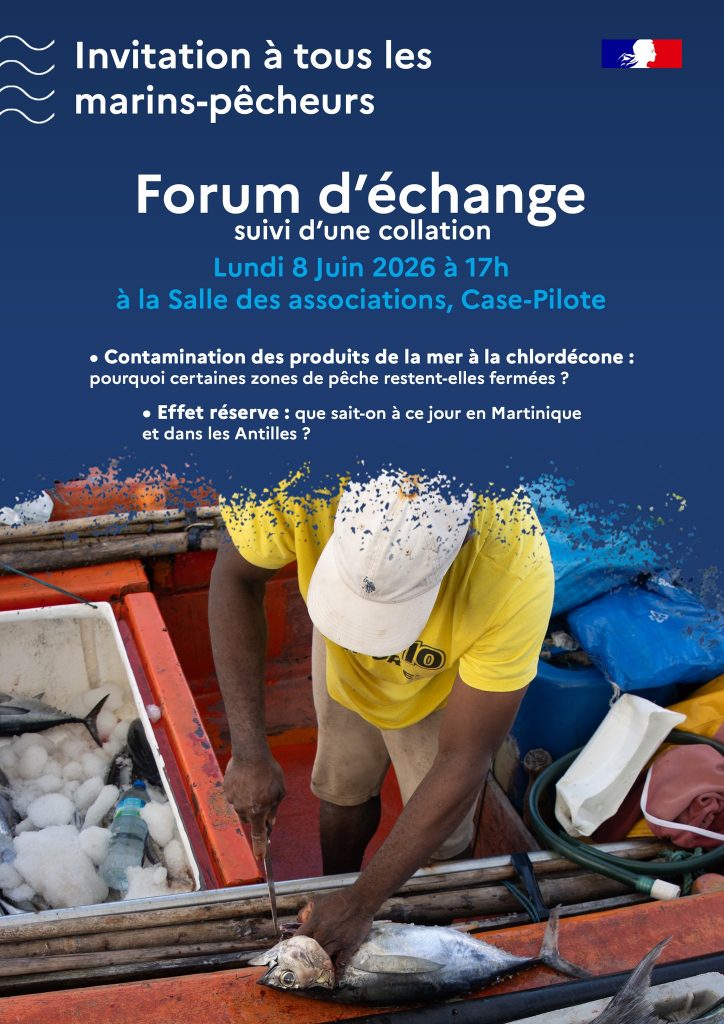
All fishermen from the Northern and Central Caribbean are invited to a discussion forum on Monday, June 8, 2026, at 5:00 p.m. in the community hall in Case-Pilote.
The speakers will attempt to address various issues related to the contamination of seafood with chlordecone:
- Chlordecone Contamination in Seafood: Why Do Some Fishing Areas Remain Closed?
- The "reserve effect": What do we know so far in Martinique and the Caribbean?
The event is organized by the Martinique Marine Nature Park, and light refreshments will be served after the event.
Preventing Contamination
Studies on chlordecone contamination often focus on soil pollution and agricultural production, but chlordecone contamination also affects the marine environment.
Originally present in the soil, chlordecone runs off into coastal waters via rivers and watersheds. From coastal waters, the substances are transferred to wildlife—particularly through zooplankton—and thus contaminate the entire food chain.
Little is known about marine pollution, and studies are being conducted to learn more about the modes of transmission and the extent of pollution in marine environments. To learn more, join us on June 8.