
The climate crisis is no longer a distant threat to future generations. It is already affecting the daily lives of millions of children around the world. In its 2026 Report on Climate Risks to Children, UNICEF has made a troubling observation: nearly half of the world’s children are now exposed to at least three simultaneous climate-related threats. Island territories, which are particularly vulnerable to extreme events, are among the areas most at risk.
A generation facing multiple climate-related challenges
According to UNICEF, 1.1 billion children, or nearly one in two children worldwide, live in areas exposed to at least three combined climate hazards. In total, nearly all of the world’s children are now facing at least one major climate risk.
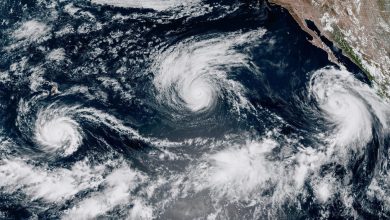
The report focuses on eight particularly common threats: droughts, heat waves, extreme heat, river and coastal flooding, tropical storms, wildfires, and sand and dust storms.
The consequences are already clearly visible. Heat waves increase the risk of heatstroke and dehydration; droughts exacerbate food insecurity; and storms and floods cause long-term disruptions to access to essential services and sometimes force entire families to flee their homes.
«Children’s lives continue to be disrupted by heat waves, wildfires, droughts, and floods,» said Catherine Russell, Executive Director of UNICEF.
Island territories that are particularly vulnerable
UNICEF emphasizes the unique situation of island territories. The report states that All children in the French island territories are at risk from severe tropical storms.
This vulnerability goes beyond the mere issue of exposure to weather events. On islands, a major weather event can simultaneously affect several essential services: schools, health facilities, water systems, transportation infrastructure, and social protection programs.
The organization also points out that many island territories have limited adaptive capacity due to public services that are sometimes underfunded or face specific structural constraints.
Strengthening Regional Resilience Today
In light of this, UNICEF is calling on governments and all public actors to make adaptation a priority. In particular, the organization advocates for the development of safe and environmentally friendly schools, health systems capable of withstanding climate shocks, more robust water and sanitation infrastructure, and early warning systems tailored to children’s needs.
Another challenge is to better involve young people in climate action by strengthening environmental education and skills related to the ecological transition.
Beyond the global figures, the report highlights a reality that is becoming increasingly apparent for island regions: protecting children from climate change is no longer just a matter of risk prevention.
The challenge now is to adapt essential services and build regional resilience in order to preserve the living conditions of future generations in an environment that is expected to experience more frequent and intense extreme events.
The document can be downloaded from the UNICEF website or by following this link Children’s Climate Risk Report 2026