People and Nature. At the intersection of sustainable agriculture and social commitment, the Jardins de Macabou help sustain the Martinique region and its local biodiversity. Following a phase of soil regeneration, this is a beautiful testament to nature’s resilience. Meet Céline, who leads this small haven of nature’s resilience in the face of soil erosion.
Regenerating the Soil
The Macabou Gardens were established many years ago on land that had been leached by years of livestock farming. «This project was launched on land that was unpolluted but degraded after decades of livestock farming; the topsoil was virtually nonexistent when we arrived. Fortunately, the clay-rich nature of this soil allowed it to hold its ground and prevent desertification. After regeneration efforts, the soil now has a higher fungal content and lower bacterial content,» explains Céline of the Macabou Gardens. «Many wild plants—far more diverse—have been able to take root on the site.»
In addition, «we’ve also created a number of ponds, which help generate an »edge effect’—a term used in permaculture to describe a zone of contact between two ecosystems. “In our case, this is an area that helps increase biodiversity,” she explains.
Rebuilding Life
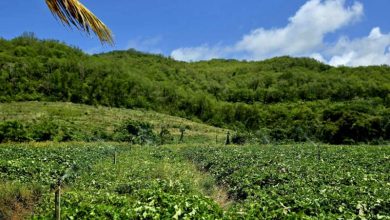
Starting with soil regeneration, the goal is to encourage the return of life—specifically, flora and fauna. Leaving certain plots of land fallow then allowed for «a natural transformation of the land from «meadow» to «forest,» in order to enhance the local native flora and create spaces large enough for wildlife to return.».
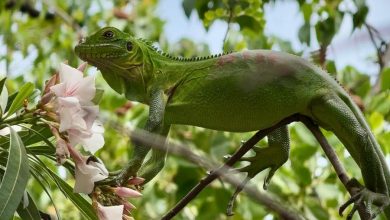
Alongside these fallow plots, soil regeneration methods were applied to other plots, allowing for faster progress. «The soil regeneration practices on the plots we chose to plant have resulted in these plots undergoing a faster ecological process than the fallow plots,» she explains. « This return to nature has resulted in the planting of 5,000 fruit trees, representing about 50 different species.» These various tree species were intended to attract birds—with berry-bearing trees—and bees—with honey-producing trees. «These trees are suitable for bees and many other pollinators, which allows us to have a fairly wide variety of insects. We also plant a lot of vines, which attract butterflies.» This regeneration has made it possible to establish a beekeeping operation, among many other activities on the site.

A Long Process in Support of Biodiversity
Creating a biodiverse ecosystem is a long-term process that requires a long-term commitment.
«The goal of these plots planted as fruit forests (or edible forests) is to transition from meadow soil (bacterial) and pioneer vegetation (here, particularly thorny —acacias—) to fungal (forest) soil and fruit tree vegetation associated (in successional stages) with a number of other plants (canopy trees, shrubs, aromatic and medicinal plants, groundcover, tubers),»,
Céline explains, in detail.
«Each plant has multiple uses (often as a source of nectar for bees and food for wildlife), provides protection from the wind and sun, and helps produce organic matter through falling leaves as well as through pruning (sources of wood, plants used for food or medicinal purposes, etc.).»
On soil with low biodiversity, a new ecosystem rich in species and diversity has thus gradually emerged.
«In addition to all these planted species, we encourage—where we deem it appropriate—the growth and spread of wild plants that we have identified as valuable resources for a variety of reasons, such as the logwood tree, for its high nectar content and its wood, or the jujube tree for the same reasons,»,
the young woman says.
Since 2012, the Macabou gardens have thus served as a fine example of nature’s resilience in the face of human economic activity. Building on this fertile ground and buoyed by this initial victory, Céline makes it a point of honor to open up this green space to people, because one cannot exist without the other.
Simon Douaglin