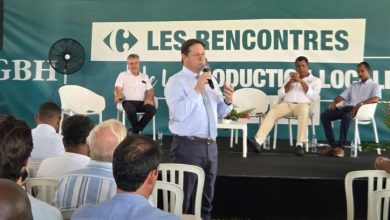
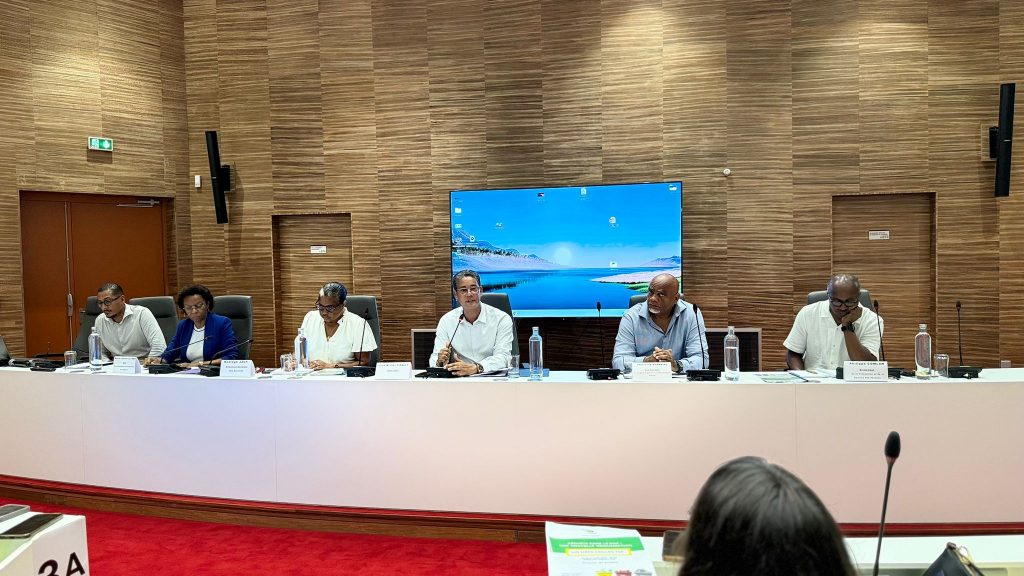
Five months after the change in waste collection, bins are still overflowing in the South. On August 27 in Rivière-Salée, Espace Sud acknowledged a communication breakdown and detailed the causes of the delays: a shortage of trucks, overloaded transfer stations, and sorting that remains haphazard.
Stated objective: a return to normal within a few months, without a tax increase.
| 50 metric tons per day | the current quota for the Espace Sud at the Fort-de-France incinerator, compared with 100 under normal circumstances |
| 5 out of 20 | Trucks delivered to the service provider on the Caribbean coast; the last ones are expected in February–March 2027 |
| 106 metric tons | packaging collected in July along the Atlantic coast, up 15 % from June |
| 30 metric tons | food waste over the same period, showing steady growth |
| 30 million euros | spent annually on waste management, out of a budget of 91 M€ |
| 88 schools | targeted by the back-to-school awareness campaign |
The containers are still overflowing in the South. Five months after the market change, Espace Sud has finally issued a public statement. And the problem isn’t just with the trucks.
50 metric tons per day instead of 100
That is what the metropolitan area currently has at the Fort-de-France incinerator. Some technical maintenance have halved the quota. One furnace will be shut down in January for major maintenance.
The other disposal site, the landfill in Petit-Galion, Le Robert, closes at 5:00 p.m. A truck that left Sainte-Anne and arrived at 4:30 p.m. leaves full. It spends the next morning unloading. The route falls behind schedule.
5 out of 20 trucks
Second roadblock: the equipment. The narrow roads of the South require special vehicles—virtually handcrafted—that are fragile in our climate. On the Caribbean coast, Only 5 out of 20 have arrived. The last ones aren't expectedby February or March 2027.
The contrast with the Atlantic coast is striking: as soon as four new dump trucks arrived in mid-June, the service improvedimproved.

«It doesn't’y a »There's no reason why the South should be at a disadvantage compared to the Center and the North."
Jean-Yves Bonnaire, Vice President in Charge of Waste Management and Recycling
106 metric tons of packaging, + 15 %
The third hurdle is sorting. But that's where the numbers change. On the Atlantic coast, July posted a little over 106 metric tons of packaging, in an increase of more than 15 in the third quarter In June, with collection refusals remaining stable and low. Food waste is approaching 30 metric tons.
The yellow bin has become the primary bin: all packaging goes in it, without exception, as of January 1, 2026. The gray bin, on the other hand, is picked up only once every two weeks.
«We didn't explain clearly enough what was at stake.»
The admission comes from the elected officials themselves. Between the decision to switch contracts and its implementation, the public was not prepared. Espace Sud operated for three years without a communications director.
Since April: one public meeting in each of the twelve municipalities, two hours of airtime on a major radio station, and a letter sent to 58,000 households in the South. When school starts again, we’ll set our sights on the 88 schools in the region.
Sort Your Vegetable Scraps, Feed the Island
The brown box share in the organic recycling center from Robert, which produces a compost used by market gardeners in Martinique. The glass, meanwhile, is crushed on site and turned into glass concrete, which has been tested by the regional laboratory and is already being used for the platforms of the recycling stations.
«Waste should no longer be considered waste—it becomes a resource.»
Marie-Jeanne Letord, Deputy Director General in charge of the water cycle and waste management
30 million euros per year
It's near’one-third of the budget for the Espace Sud project, which totals 91 million. When approached by Martinique Transport, the local government stated that any potential profits would first be allocated to environmental initiatives  . However, there is no question of changing the household waste collection fee.
«There is no question of taxpayers in the South being affected.»
Fred-Michel Tirault, president of Espace Sud
Espace Sud’s credibility is on the line in the coming months. The encouraging trend along the Atlantic coast shows that a new market can thrive once the equipment is delivered and habits are established, but the Caribbean coast won’t have all its trucks until early 2027, and maintenance on the incinerator in January will further tighten the squeeze on disposal options. Between progress in recycling and growing public outrage, waste management is emerging as the first political test of Fred-Michel Tirault’s term in office.